
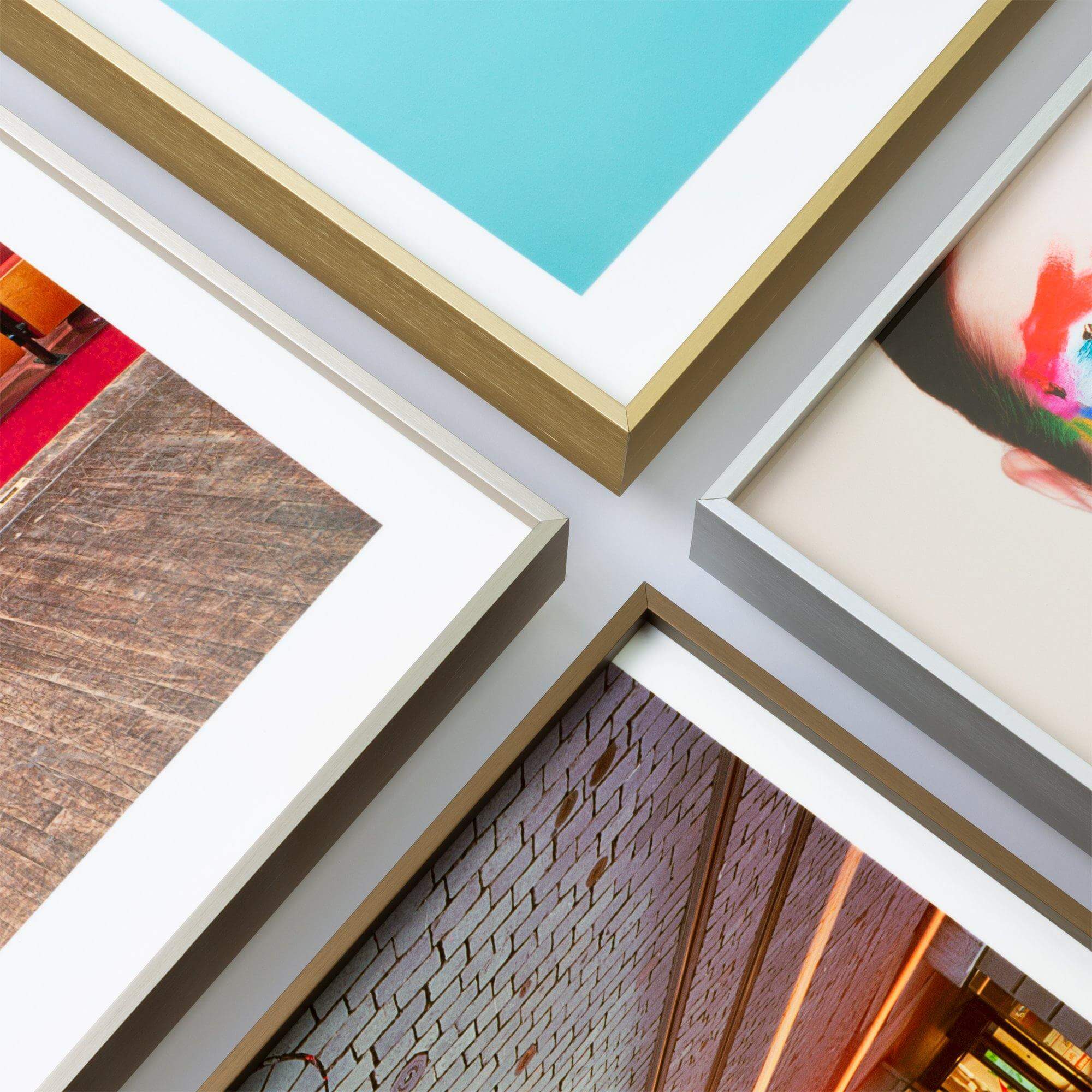

【Image Output Guide】Art Microjet vs. Metal Photo: Which Should Creators Choose?

When preparing to print their works, many friends often hesitate: "Should I choose Giclée printing or ChromaLuxe metal prints?"
As a creator who once bought a professional Giclée printer and was fascinated by the warmth of paper fibers, I've asked myself this question countless times. And my answer has always been consistent: "There is no best medium, only the most suitable medium."
Today, Sister Wei Si wants to share my personal journey and the lessons learned in the image printing industry to discuss how to choose between these two premium media.
While we focus on exploring Giclée and metal prints as two premium media, if you've ever wondered about the difference between traditional "chemical developing" and various modern "physical printing" methods, we've put together a comprehensive overview for you:
"Photo Developing or Photo Printing? A Complete Guide to Taiwan's 5 Major Printing Channels and Image Output Technologies"We hope this comprehensive summary will enable you to appreciate the fascinating science and craftsmanship behind image materialization from a broader perspective.
Captivating Giclée Printing: Origins, Paper Tactility, and Ink Magic
Giclée printing, a technique that originated in the 1990s, was first named by French-American painter Jack Duganne, derived from the French word "giclée" (meaning "to spray"), specifically created to meet the high-quality demands of art reproduction.
Its beauty, I understand better than anyone. The core secret to why it's called "archival-grade," in addition to acid-free paper, lies in its professional 12-color pigment ink system.
When I used to print my own works, what amazed me most was its "multi-tone carbon black ink." Ordinary printers often produce black and white photos with a greenish or reddish tint; however, top-tier Giclée systems feature three to four different densities of gray and black inks, allowing black and white images to exhibit extremely pure, smoothly transitioning classic grayscale tones, which is definitely the ultimate pursuit for black and white photography enthusiasts.
Furthermore, these tiny mineral pigments are precisely "layered and adhered" to the surface of premium acid-free paper. Because the ink remains on the surface and is not absorbed by the paper fibers, it can present the sharpest, most delicate image quality and the warm feel of the paper.
However, please also remember this technical characteristic of "remaining on the surface," as it is the fundamental reason why Giclée prints are susceptible to water damage and scratches, and why they require protection with a glass frame.

2026 Taiwan Giclée Market Observation: How Should We Choose Paper?
In the past, when choosing paper, I often got confused by various technical terms. In fact, the real difference in value lies in what "paper base material" you choose. I have compiled the four most common mainstream paper materials currently used by top peers in Taiwan and suggested the most suitable scenarios for creators in different fields:
| Paper Grade | Representative International Brands | Expert Notes and Recommended Scenarios | Reference Price (per square foot) |
|---|---|---|---|
| Premium Acid-Free Cotton Rag (100% Cotton Rag) |
Hahnemühle Photo Rag Canson Rag |
The designated standard for major art museums, featuring an ultimate matte smoothness and warm tactility. [Recommended Scenarios] Digital reproduction of watercolors, illustrations, traditional Chinese paintings, sketches, and prints, as well as archival-grade photography. |
NT$ 310 - 380 |
| Professional Baryta Photo Paper (Baryta) |
Hahnemühle FineArt Baryta | Paper base coated with barium sulfate, replicating the subtle sheen and substantial feel of traditional darkroom silver halide photo paper, with deep dark tones. [Recommended Scenarios] Black and white photography enthusiasts, street photography, high-contrast abstract art. |
NT$ 350 - 380 |
| Luster and Glossy RC Photo Paper (Luster / Glossy RC) |
ILFORD Smooth Pearl Epson Premium Luster |
Double-sided resin-coated surface, vibrant and sharp colors, basic splash resistance, extremely high cost-performance ratio. [Recommended Scenarios] Digital paintings, lifestyle photography, portraits. Particularly recommended for creators trying Giclée for the first time or those with limited budgets. |
NT$ 160 - 230 |
| Specialty Art Media (Canvas / Washi) |
Acid-free canvas Japanese Washi paper |
Strong three-dimensional texture can bring unique quality to images. [Recommended Scenarios] Reproduction of original oil paintings, calligraphy, manuscripts, or special creations pursuing an oriental ink wash aesthetic. |
NT$ 200 - 330 |
Note: The above are average reference prices for the Taiwan market in 2026. Actual quotes may vary depending on each shop's color management technology and post-processing services.

What Many Creators Overlook: The Hidden Challenges After Printing
To be honest, Giclée printing is already a very mature industry in Taiwan. As long as it's a professional output center, standard workflows include color management, and the texture of the printed works is absolutely exquisite. If we only discuss "how beautifully the paper is printed," we would only be focusing on the "first half" of a Giclée print's life.
Because what many creators don't consider is: What happens after the work comes out of the printer?
- Risks of Transport and Touch: As mentioned earlier, the ink "adheres" to the surface of the paper, making premium acid-free cotton paper very delicate. During the process of transporting it from the output center to the framing studio, or bringing it home to handle, if the paper is even slightly creased or its surface accidentally scratched, the entire piece can be ruined.
- Framing Dilemma: For formal exhibitions, works are ultimately displayed on walls. Some creators, in pursuit of minimalism and to avoid glass reflections, opt for "bare mounting" (no surface protection at all). While this approach is aesthetically pleasing, during an exhibition, if a viewer even lightly touches it, the paper surface or corners can suffer irreparable dents and scratches.

Another Real-World Challenge: Lessons from Taiwan's High Humidity Climate
In addition to the risks of transportation and framing collisions, when I used to own a Giclée printer, the thing I feared most was Taiwan's humid weather.
In an environment with an average humidity of 75%, paper without glass protection is highly susceptible to moisture, mold, or oxidative fading. This means that if I print Giclée works and plan to display or collect them long-term, I would have to invest an additional budget to customize acid-free mat boards and UV-protective transparent frames. Of course, if I had a large dehumidifier or a constant temperature and humidity storage space, Giclée would definitely be the first choice (unfortunately, I don't); but if I just want to casually hang my work in the living room or other everyday spaces, and not worry about the humid weather every day, what should I do?


If you want to delve deeper into the actual impact of Taiwan's climate on Giclée prints and the degradation phenomena of different digital prints, we recommend reading our in-depth analysis:
This is why I decided to delve into ChromaLuxe metal prints.
It was precisely because I had experienced these difficulties, from transportation and framing to maintenance, that when I encountered ChromaLuxe metal prints, I was so amazed and decided to fully commit to this field. I hope to provide creators with another "stress-free" solution for archiving their works.
Compared to Giclée printing, which keeps pigments on the surface, metal prints utilize "dye-sublimation transfer technology," where image molecules transform into a gaseous state and are directly "infused" into the special coating on the aluminum panel's surface.
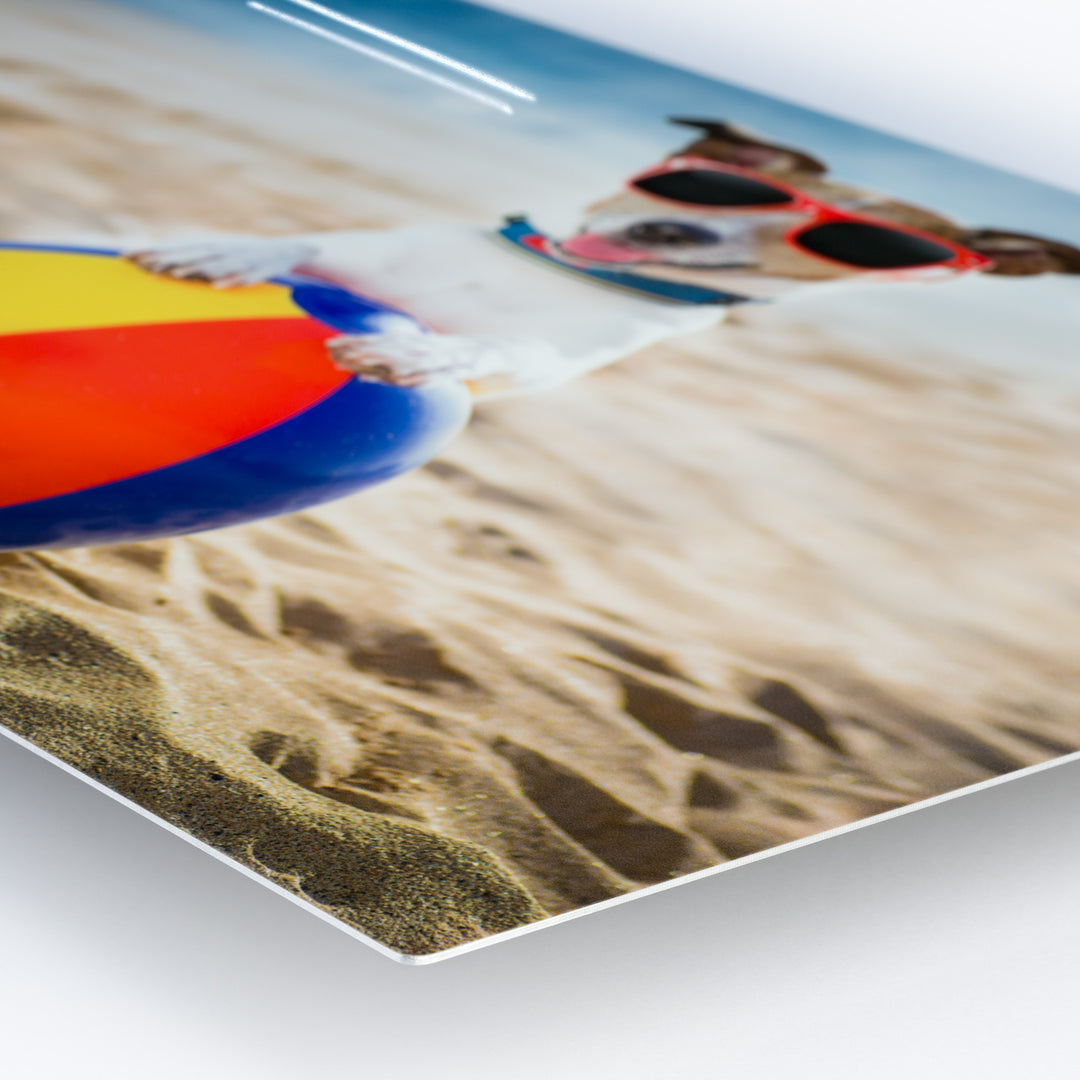
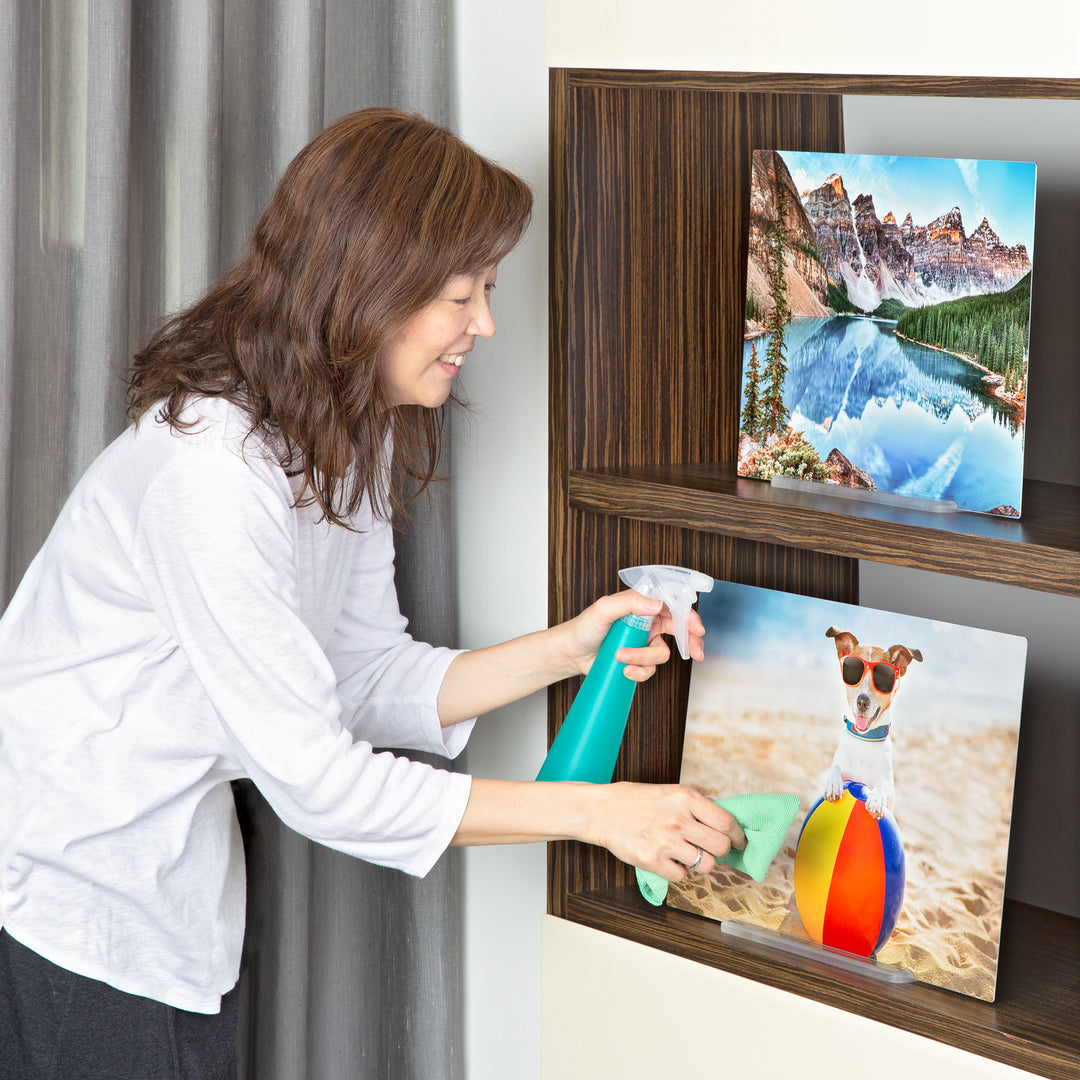
It genuinely solves the physical problem of paper being easily affected by the environment: it is completely waterproof and moisture-proof, hard and scratch-resistant, and can be wiped directly with a cloth if accidentally touched. It allows us to completely eliminate the delicate risks of transportation and bulky transparent frames, displaying image works safely in modern living and exhibition spaces with the most minimalist, floating, frameless posture.
The durability of metal prints is not just an empty claim. We have compiled the rigorous test reports from the international authoritative institution WIR, delving into the principles of its fade and scratch resistance:
Head-to-Head Comparison: Giclée vs. Metal Prints
| Evaluation Factor | Giclée | ChromaLuxe Metal Prints |
|---|---|---|
| Visual Texture | Warm, profound, with an alluring paper fiber feel | Extremely clear, high gloss, with a modern three-dimensional feel |
| Water and Weather Resistance | Can handle strict temperature and humidity controls | Completely waterproof and moisture-proof, suitable for unstable temperature and humidity environments |
| Framing and Maintenance | Requires custom acid-free framing for protection, bare mounting is prone to dents from contact | Integrated, frameless, the best choice for those who don't want to bother with maintenance |
My Final Recommendation: What Scenarios Are These Two Media Suitable For?
As a creator who loves both, I would recommend the following:
If you are holding a pure black and white photography exhibition today, or your creation is a watercolor illustration reproduction that desperately needs the breathability of paper, do not hesitate to choose top-tier Giclée printing and pair it with the most comprehensive protective frame.

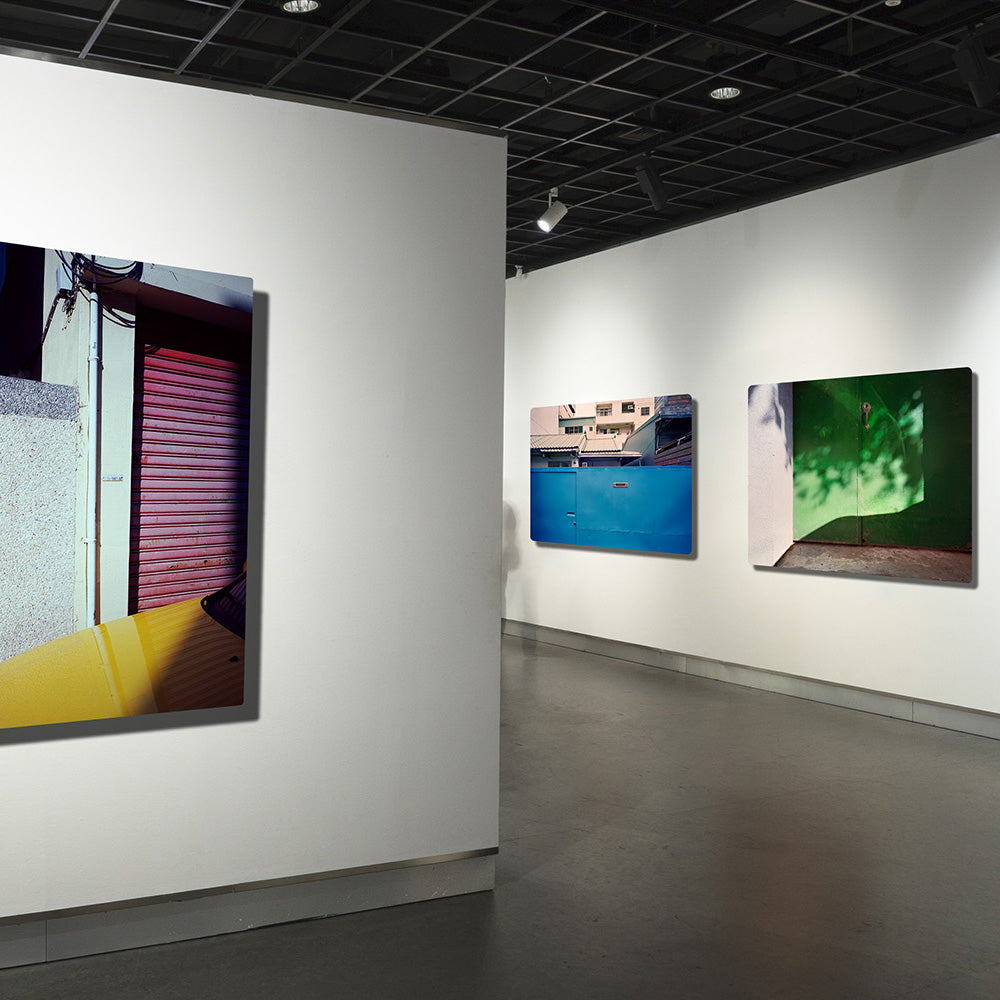
Kbr Fundación Mapfre Barcelona Photo Center
More information about the exhibition

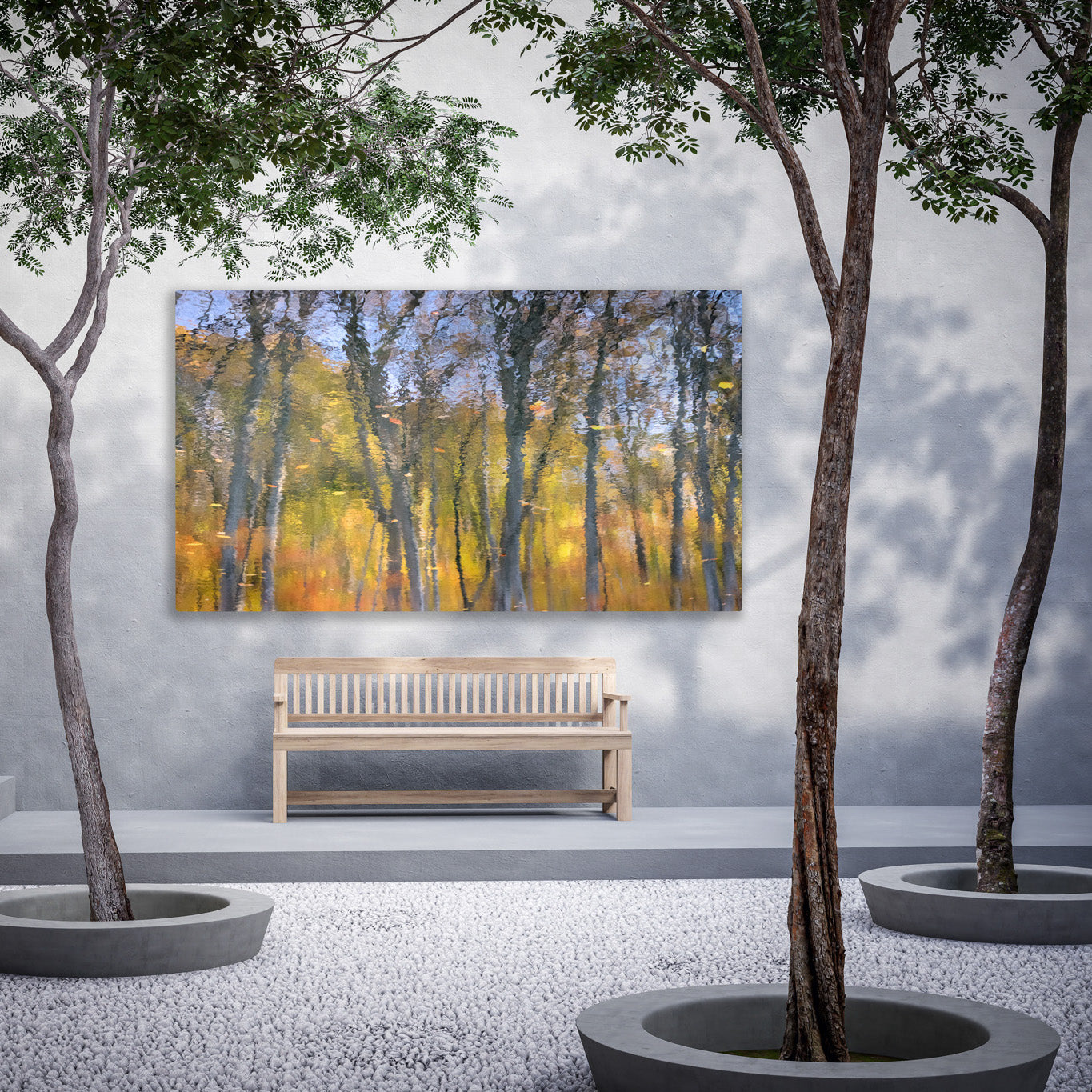
Kbr Fundación Mapfre Barcelona Photo Center
More information about the exhibition
However, if you want your family photos to withstand the test of time, if you want to hang your artwork in a bathroom or a high-traffic commercial space, or if you simply prefer a frameless, minimalist modern aesthetic and don't want to worry about bare mounts getting dented, then metal prints will absolutely satisfy you.
Conclusion: The Original Intention Remains Unchanged
No matter which medium you ultimately choose, "materializing" your work in the digital age is itself a romantic and ceremonial act. As Sister Wei Si, who has accompanied you through countless image journeys, I hope to be more than just a printing professional for you; I want to be a fellow enthusiast who loves images just as much as you do. I hope to use my experience to help you find the most suitable home for your cherished creations.
I look forward to working with you to ensure these heartfelt images leave their most beautiful marks, impervious to the passage of time.
References and Authoritative Sources
- NEDCC - Creating Long-Lasting Inkjet Prints
- ChromaLuxe Official: The Science of Sublimation and Durability
- ChromaLuxe Official: Understanding the Wilhelm Test Report
- Wikipedia - Giclée (The History and Evolution of Fine Art Printing)
- ResearchGate - Effects of Digital Printing Applications on Contemporary Art
Most Frequently Asked Questions by Creators
Q1. Which medium is suitable for black and white photography? +
In my experience, pure black and white works are best suited for Giclée printing. Top-tier Giclée uses dedicated carbon black inks to produce extremely pure, neutral tones. While metal prints offer stunning color reproduction, for the extremely subtle transitions in black and white, art paper still has a slight edge.
Q2. Can my phone photos also be output in large sizes? +
This depends not only on file size but critically on "pixel density." We recommend utilizing our free image health check service; we'll help assess whether enlargement will cause pixelation, ensuring the final output's detail.
Q3. What is the approximate market price for high-quality printing in Taiwan in 2026? +
For Giclée prints on premium acid-free cotton paper, the current average price is around NT$310 to NT$380 per square foot; entry-level RC photo paper is about NT$160 to NT$230. As for metal prints, while the unit price may seem high, you completely save on the hidden costs of custom acid-free frames, UV-protective glass, and the anxiety of bare mounting. In the long run, it's a very worthwhile archival investment.