
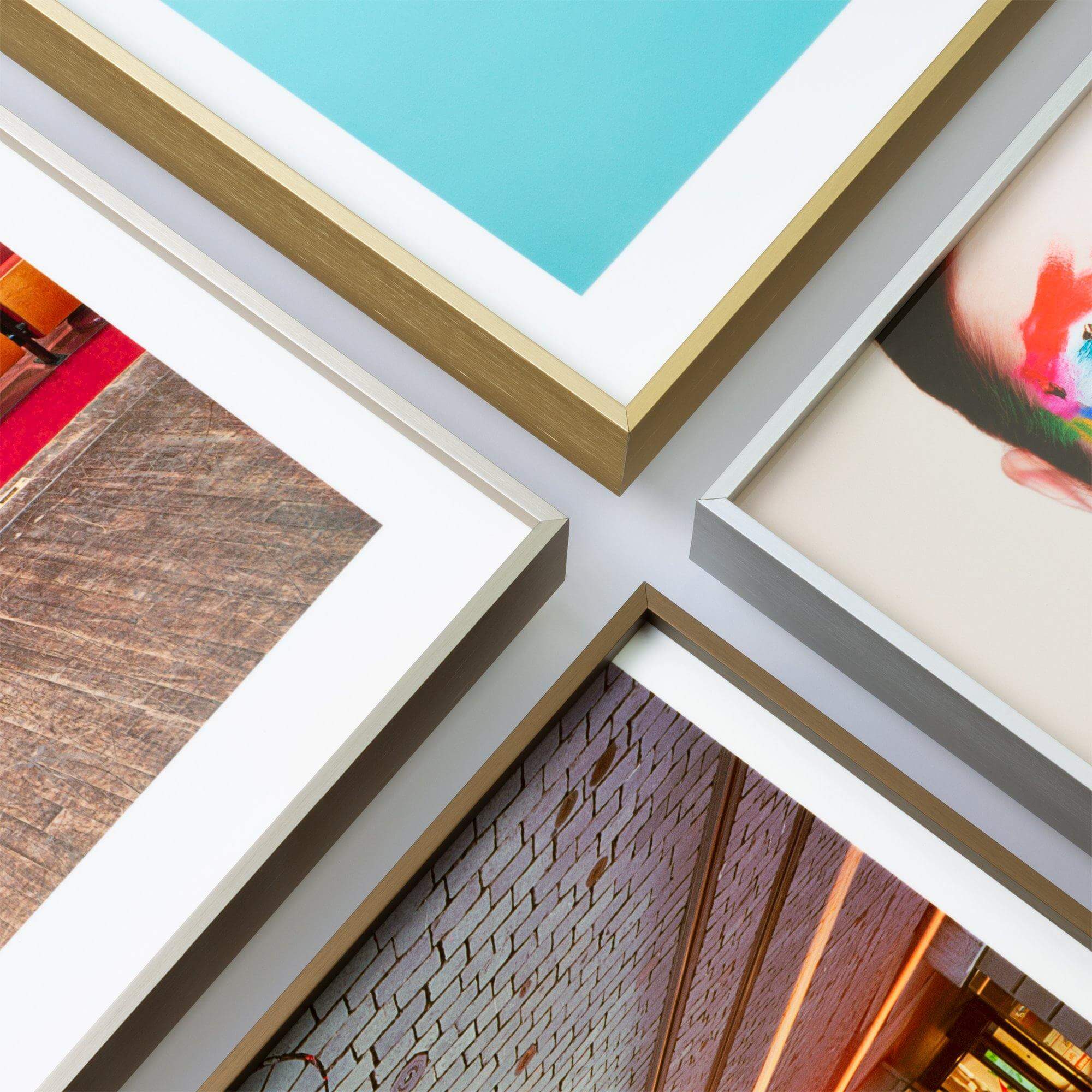
[Photography Exhibition Output Guide] Aside from Giclée Prints, why are more and more creators turning to metal prints?

Standing alongside the artwork, may every piece of heartfelt creation find its perfect place to radiate the light of its soul.
[Sister's Honest Thoughts on Curation] Organizing a photography exhibition is not just about choosing materials; it's also about deciding the "latter half" of your creation's life.
Whenever a photography artist asks me, "Which material should I choose for an exhibition?", I first ask myself a core question: "Where will these artworks go after the exhibition ends?"
- If it's a short-term outcome exhibition (not to be preserved afterwards): I would opt for traditional photo paper and invest more effort and budget into the next creative exhibition.
- If you hope your work will be collected by collectors, tour multiple times, or accompany collectors stably for a long time: I would use ChromaLuxe® metal prints. This is not only because it meets international gallery display standards, but also because it provides myself and collectors with the most reassuring commitment.
This February, I participated in a photography group exhibition and deeply felt the anticipation in everyone's eyes for the physical manifestation of their works, along with a hint of anxiety. In this article, I want to help you move beyond the simple price fallacy and objectively evaluate together to find the best home for your heartfelt creations.
Decision Map: Finding the Best Home for Your Masterpiece
There's no inherently good or bad medium for displaying art; rather, the best choice depends on the exhibition's purpose. Before curating, we recommend the following assessment:
| Assessment Dimension | Traditional Giclée (Paper) | ChromaLuxe® Metal Print |
|---|---|---|
| Exhibition Purpose | Short-term display, one-time exhibition | Collector's item, touring exhibition, classic masterpiece |
| Color Physical Limitations | 12-color ink, extreme pure black and white, and special fluorescent colors | CMYK dye-sublimation, perfectly suited for 90% of realistic images |
| Environmental Adaptability | Weaker, paper requires strict temperature and humidity control | Stronger, with water-resistant and moisture-proof surface, stable and long-lasting |
| Production and Communication Time | Requires extra time for back-and-forth communication with framers | Requires advanced planning. Calculate directly on the official website, no communication gaps |
Regarding Budget: Beyond Price, There Are Hidden Costs of "Time and Effort"
Many photographers hesitate at the price of metal prints during initial planning. However, the basis of comparison is often misguided from the start.
When we introduce artwork to the collector's market, the framing method for traditional paper absolutely cannot be a "regular wooden frame." To ensure paper survives in Taiwan's humid climate, the artwork must be accompanied by acid-free mat board, acid-free backing, and even expensive museum-grade anti-glare acrylic (if you want to learn more about the real impact of climate on paper materials, we strongly recommend reading our practical test: "How Long Can My Inkjet Print Last? Debunking the 60-Year Fade-Resistant Myth and Taiwan's Moisture-Proof Guide"). When these hidden costs accumulate, coupled with the artist's time and effort spent traveling between printing centers and framers to confirm details, that's the most easily overlooked and most expensive part.
The most thoughtful aspect of metal prints is their integrated design. They inherently offer archival protection; we don't need to buy extra dehumidifiers, and collectors don't have to worry about mold. This also saves countless production communication costs and future maintenance efforts. This value is worth it, no matter how you calculate it.
Characteristics of the Medium: Sister's 90/10 Honesty Rule
Each medium has its unique characteristics. The limitations of the production methods behind different media determine the soul of the colors.
After so many years in business, I must honestly say that 90% of images (whether grand natural landscapes, delicate low-light ecology, or commercial portraits) look astonishingly transparent and three-dimensional on metal prints, often surpassing traditional photo paper.
However, if the essence of your work falls into that "critical 10%" – for example, you need the extremely rich pure black-and-white grayscale of the silver halide era, or your image features very special fluorescent orange-green colors – I would directly tell you: "Let's use traditional giclée for this one!"
We will honestly analyze the output effect for you to understand, and we would rather not let your painstaking work compromise on an unsuitable material.
Precisely because of the physical and chemical limitations of each imaging technology, distinct visual presentations are created. If you are preparing for an exhibition and also wish to gain a broad understanding of the evolution of craftsmanship from traditional darkroom development to modern giclée and dye-sublimation technologies, we have compiled a complete overview for you:
"Developing Photos or Printing Photos? A Full Analysis of Taiwan's 5 Common Photo Processing Channels and Imaging Output Technologies"We hope this comprehensive summary will accompany you in appreciating the fascinating craftsmanship behind physical imaging with a more thorough perspective.
Real Trajectories in the Exhibition Hall: Moments That Made Me Proud
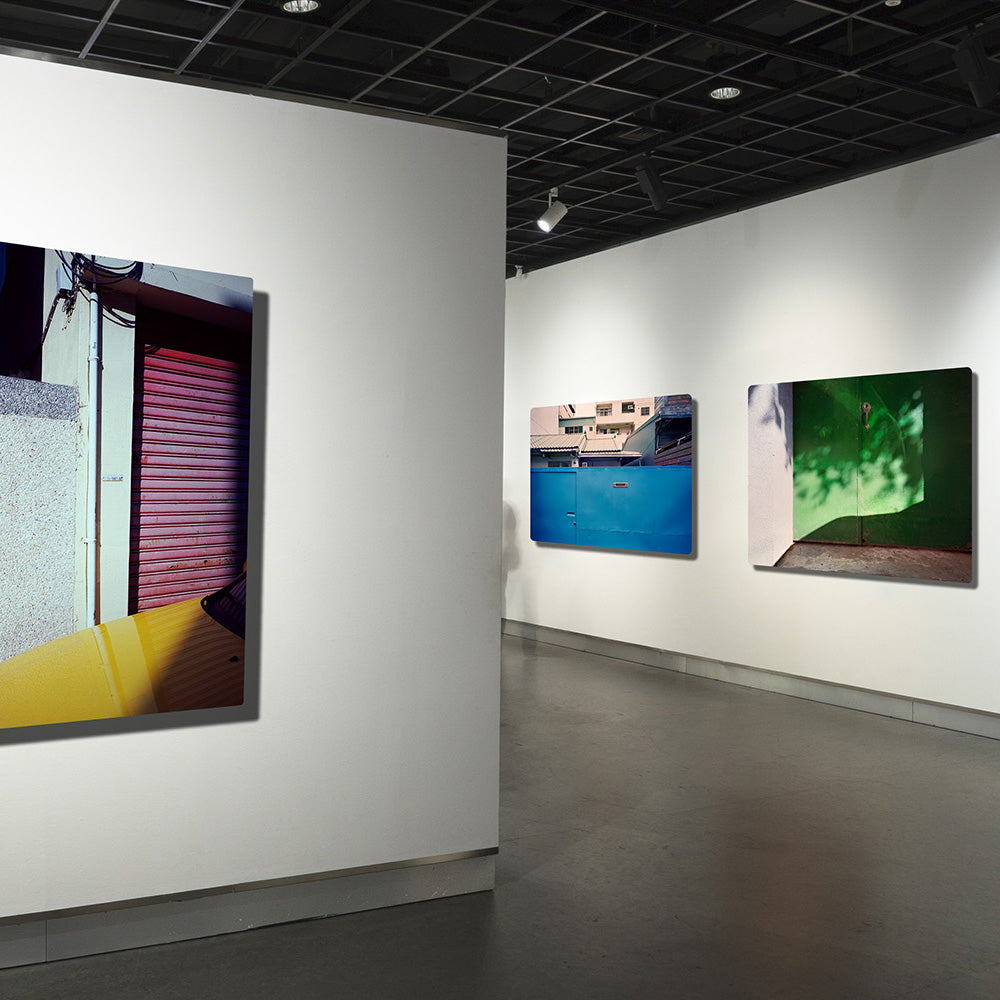
Many photographers I chat with for the first time ask me, "In Taiwan, do many people really use metal prints for exhibitions?" In fact, over the years, we've helped photographic artists' works enter national galleries. If you frequent exhibitions, you might have even come across these ChromaLuxe® pieces, personally output by us:
-
Low-Light and Street Photography Exhibition:
Low-light photography most tests the "shadow detail" of output materials. A 2024 low-light photography exhibition perfectly demonstrated the advantages of metal prints: without the obstruction of traditional acrylic glass, blacks can sink to extreme depths. Shadows don't appear grey, and highlights seem to emanate from the aluminum substrate, giving the image dramatic tension. -
Permanent Exhibition of Ecological Photography in Commercial Spaces:
Having artworks permanently displayed in commercial spaces is actually a more demanding test than in galleries! This ecological photography exhibition chose metal prints precisely for their unparalleled weather resistance. Without the need for glass protection, not only are the sharp feather details of the diving osprey perfectly rendered, but it also boasts moisture-proof, scratch-resistant, and easy-to-clean properties, keeping the artwork looking new for years of display. -
National Museum and Educational Special Exhibition:
National-level exhibitions have extremely strict requirements for "color accuracy" and "weather resistance." Especially in museum educational exhibitions, artworks need to be displayed for extended periods and accurately convey color details (such as color swatches in the image). Metal prints not only faithfully reproduce the original color layers of the image, but their sleek, floating frame design, free from acrylic reflections, also naturally aligns with international gallery display standards. -
Award Recognition and Art Bank Collection:
More and more creators continue to use metal prints as their output medium, holding joint exhibitions and winning photography gold medals. Their exceptional weather resistance also makes them the top choice for national art banks to safely collect. -
Long-term Planning for Large-Scale Solo Photography Exhibitions:
When holding a solo exhibition of cherished works, beyond considering the immediate visual impact, it's crucial to pave the way for future "collector storage" and "subsequent touring exhibitions." The durable, lightweight, and acrylic-free nature of metal prints not only significantly reduces anxiety about damage from repeated handling and logistics, but its integrated protection also allows collectors to confidently and effortlessly collect, making it a classic that can be passed down through generations.


Whispers from the Exhibition Hall: Lighting is Not Magic
Worried about glare from metal prints? Actually, lighting has no special magic; it's all about mastering the basics.
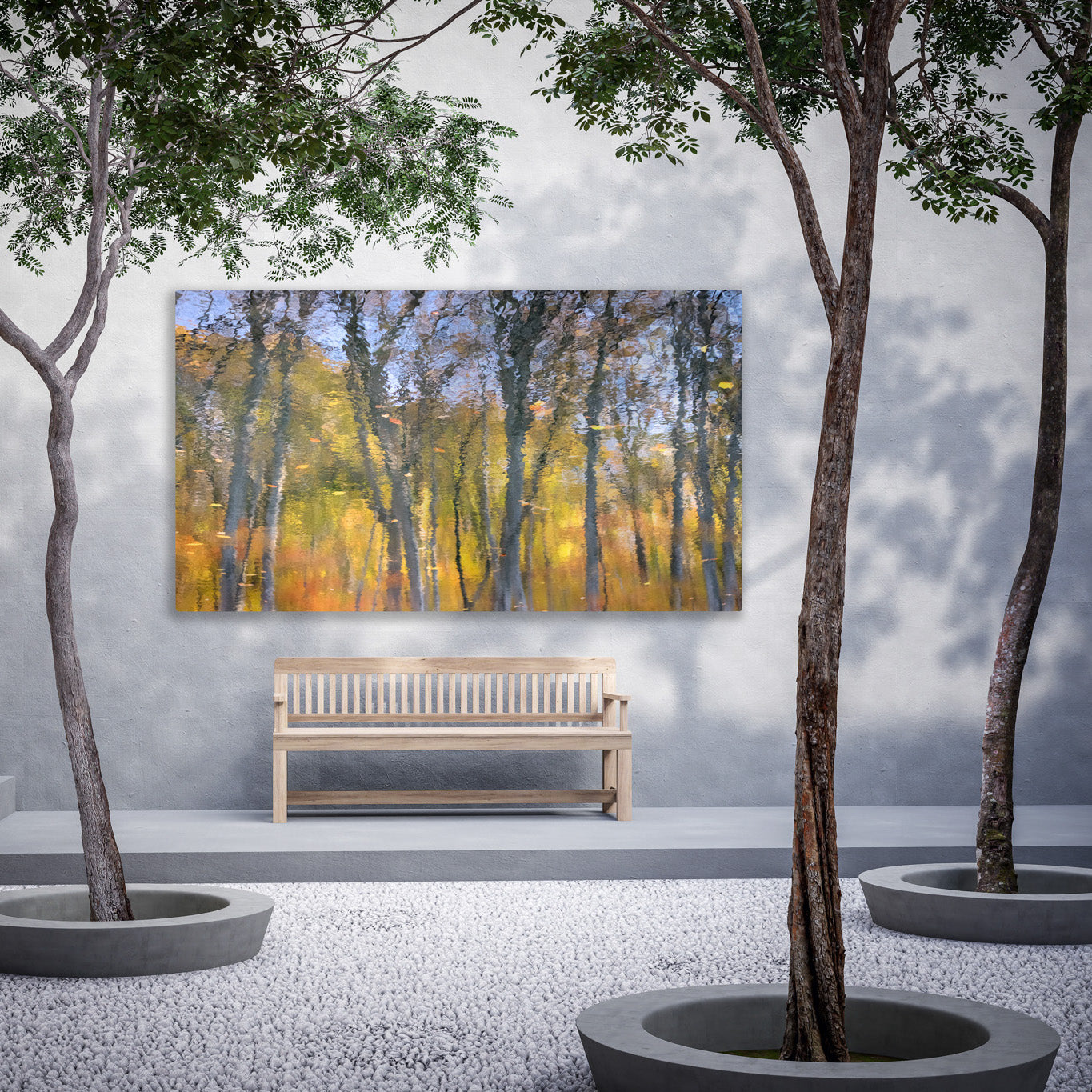
The principles of lighting are universal. Just like any professional photography exhibition, simply set the incident angle of the spotlights between 30 to 45 degrees. The real difference is this: because metal prints don't require an acrylic glass cover, as long as the angle is correct, light can penetrate the coating without obstruction, activating the purest colors from beneath the surface, making the image appear to "glow from within."
Pre-Exhibition Anxiety? Let Us Help You.
I know those nights after deciding to hold an exhibition are the toughest. Fear of files not being large enough, fear of miscalculating aspect ratios. To reduce your worries, our team has developed two dedicated digital curation tools to support your images with scientific data:
Tool One: Space Exhibition Lab
Please upload a photo of your space and virtually simulate the actual proportions of hanging exhibition pieces:
Tool Two: Image Resolution Online Checker
Upload your original photo file, and the system will instantly calculate and provide optimal printing size recommendations:
Sister's Pre-Exhibition Q&A (FAQ)
If I'm exhibiting in a damp basement or a historic site, do I really not need a dehumidifier? +
No worries! ChromaLuxe® aluminum panels are absolutely waterproof and mold-resistant. Even in extremely humid exhibition environments, the image colors remain securely sealed beneath the coating, completely eliminating the need for dehumidifiers or 24-hour dehumidification.
Are large exhibition pieces in metal prints heavy? +
Quite the opposite. The 1.1mm ultra-lightweight aluminum panel, without the front and back acrylic sheets and mat board, will definitely be lighter. The weight difference is especially significant for larger pieces. Even giant family portraits or main visuals can be hung very easily and safely.
Before printing, do I need to convert my files to CMYK? +
Absolutely do not convert it yourself! Please keep your files in sRGB or Adobe RGB and provide the highest quality TIFF or JPEG (ensure layers are merged). You can confidently leave the subsequent precise conversion to our color management system.