
Say Goodbye to Mold and Stickiness! A Museum-Grade Framing Guide with 8 Years of Testing

Framing is an art, and also the first line of defense for protecting your precious artwork.
When we print a fine art giclée print or receive a precious photographic artwork, choosing a suitable frame for it is often the most important step in giving the artwork its full life.
However, under Taiwan's perennial high temperature and high humidity climate, traditional paper framing is extremely prone to irreversible mold, cockling, and glass adhesion due to its internal "microclimate". After 8 years of actual recording and preservation testing, we deeply realized that: ChromaLuxe® metal prints, which eliminate glass protection and are naturally 100% waterproof and moisture-proof, are currently the most suitable choice for Taiwan's island climate, providing creators and collectors with a worry-free archival option.
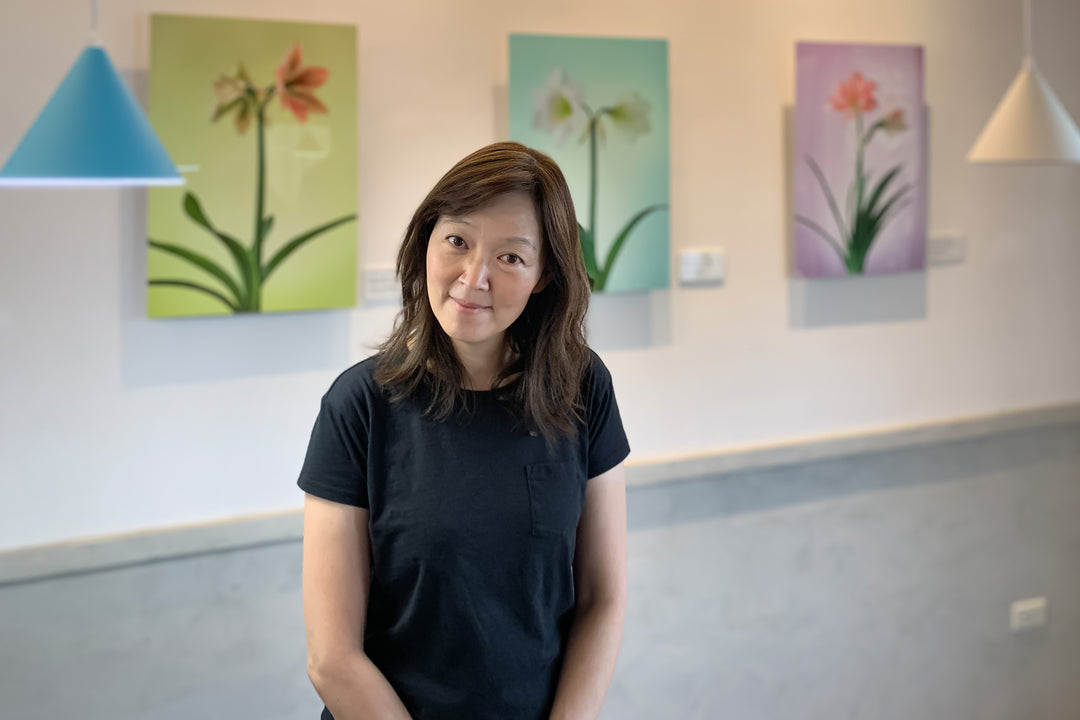
For those who deeply love traditional framing, you might be curious why we came to this conclusion. In the past, like many creators, we thought that as long as "acid-free materials" were used and a layer of glass was added, the artwork would be completely safe. But when Sister Weis personally opened her 8-year-old collection of paper photographic artwork and saw the irreversible cockling, wrinkling, and adhesive deformation, we deeply realized: can the commonly used framing methods on the market truly provide absolute protection?
Based on this regret as creators and our dedication to image preservation, we delved into top international museum conservation science and academic literature. We were surprised to find that framing is not only an aesthetic but also a rigorous physical and chemical defense battle. Encapsulating extremely sensitive inkjet prints within a frame is equivalent to creating a long-term "microclimate" for them. If we don't understand the scientific principles behind the materials, the expensive custom frames we order might backfire and accelerate the aging and deterioration of the artwork.
In this article, as guardians of images, we will share these compiled overseas academic findings with you. We will not only debunk the three major myths of traditional framing and unveil our 8-year "twin real showdown" record, but also break down the "five structural layers" of framing, providing museum-grade protection standards so you no longer waste money.
Three Environmental Challenges of Traditional Framing
Myth 1: Is "Acid-Free" Absolutely Safe?
Framing photographic artwork using professional acid-free matting techniques, such as "acid-free mat board" and "acid-free backing board," is considered the highest level of artwork protection. Using acid-free materials indeed prevents paper from yellowing and becoming brittle due to acidic substances. However, many mistakenly believe that "acid-free = moisture-proof = worry-free," which is a huge preservation myth.
According to the American Institute for Conservation of Historic and Artistic Works (AIC), the essence of acid-free mat board is still "cellulose," which has high hygroscopicity. When the ambient relative humidity (RH) exceeds 65%, these framing materials absorb moisture like sponges, which not only causes photographic paper to wrinkle and deform (cockling); high humidity also promotes the germination of mold and fungal spores. At the same time, abundant moisture also acts as a fatal catalyst, activating trace metal elements (such as iron and copper ions) hidden in the paper, accelerating the localized oxidation of cellulose.
Both of these destructive mechanisms (biological mold and non-biological metal oxidation) ultimately induce difficult-to-remove reddish-brown spots on the print—what we commonly call "foxing." Therefore, in traditional thinking, for acid-free framing to be truly effective, the display space must have 24-hour constant temperature and humidity control.
However, for Taiwanese households and general collectors who cannot keep air conditioning on all day, this is precisely why we cannot rely solely on "acid-free boards," but must further upgrade the frame's "physical defense structure" to block moisture.
Myth 2: The Danger of Glass Adhesion and "Microclimate" Condensation Effect
To protect delicate photographic paper, we usually add a layer of glass or acrylic in front. It is this seemingly protective action that creates a sealed "microclimate" inside the frame when it is hung on the wall.
Research by international conservation physicist Tim Padfield indicates that when indoor temperatures change (e.g., frequent turning on and off of air conditioning), a "thermal gradient" is created inside the frame. This causes the coldest side of the frame (e.g., the inside of the backing board pressed against a cold wall, or the inside of the glass affected by a cold snap) to reach the dew point and produce condensation, which quietly seeps into the photographic paper along the edges.
Even more terrifying, if the photographic paper is not given buffer space during framing and adheres directly to the glass, in extreme high humidity, the image's microporous coating will absorb water and soften, and the photographic paper will eventually stick to the glass, causing irreversible "blocking" that cannot be removed.

Myth 3: The Trade-off of Acrylic, and the Visual Contradiction of Optical Brightening Agents (OBA)
To ensure both safety and UV resistance, we might choose to upgrade to "UV-filtering acrylic" during framing. However, if the printed photographic paper contains "Optical Brightening Agents (OBA)," this will chemically create an extremely contradictory phenomenon: expensive UV-filtering acrylic boards will actually make the artwork "yellow and darken."
This is because OBAs must absorb UV light to emit blue light and create the illusion of "snowy white." When we add a top-grade acrylic that blocks UV light, the OBA loses its activation source, and the originally snowy white artwork will appear dull. Even worse, according to research by imaging preservation authority WIR, OBAs are inherently very unstable chemicals. Over time, OBAs not only become ineffective and degrade, but their degradation products are also the culprits in causing "Yellowish Stain Formation" on photographic paper (especially severe on general RC coated photographic paper). Pursuing temporary visual impact thus sacrifices the lifespan of the artwork.
"What if I reject OBA from the source and directly use additive-free photographic paper?"
This is indeed a very feasible solution. When printing, use "OBA-Free" 100% cotton rag or purified alpha-cellulose fine art paper. The whiteness of these top-grade papers comes from the purity of their natural fibers. When you cover them with UV-filtering acrylic, because the paper does not rely on UV light to glow, the visual contradiction instantly disappears, allowing the artwork to truly possess the strength to last for centuries.
Since OBA-free photographic paper is so good, can we forgo the front acrylic protective layer to save budget or to preserve the original texture of the paper? The answer is absolutely not. This is because inkjet prints are extremely sensitive to ozone and other pollutants in the air. A sealed protective layer not only blocks UV light, but it is also the last line of defense against air circulation, preventing photographic paper from being attacked by ozone and undergoing "gas fading."
This is the heavy price of traditional framing: to achieve true museum-grade preservation, you must simultaneously forgo the cool bright white provided by OBA and invest in expensive pure cotton paper and a UV-filtering sealed protective layer. Both are indispensable.
Precious Preservation Record: An 8-Year Real-Life Witness, the Limits of Paper Framing
Before discussing how to choose durable framing materials, I want to momentarily set aside serious scientific theories and share a personal true story as an image creator.

In 2017, during my residency as an artist at CMP Block Museum of Arts in Taichung, I completed the series "Floral Portrait (華.花)". To showcase the intricate details of the floral images, I used an Epson 8-color printer for fine art giclée prints; for framing, although it was DIY, I chose exhibition-grade metal frames (Opus Metal Exhibition Frame) brought back from Canada.

▲ This original label, preserved to this day, records the exhibition-grade frame used at the time.
Opus Exhibition-Grade Metal Frame Materials
Regular glass: Lacks insulation, highly prone to microclimate condensation due to temperature differences.
Acid-free barrier paper: Though protective, cannot prevent external moisture intrusion.
Cardboard backing board: Plant fiber material, highly susceptible to moisture absorption and deformation in Taiwan's island climate.
Hanging clips and wire
For the past eight years, this artwork has not been hung on a wall but has been quietly stored by me in its original cardboard box. Many people (including myself at the time) believed that storing artwork in a light-proof cardboard box was the safest. However, in conservation science, a typical cardboard box is itself a massive plant fiber, which absorbs moisture from Taiwan's environment like a sponge, thereby creating the most fatal high-humidity sealed "microclimate" for the artwork. In contrast, metal prints that have endured 6 to 8 years of air conditioning and drastic temperature and humidity fluctuations outside remained perfectly intact due to their material advantages. This brutally proves that traditional paper in Taiwan is difficult to even properly store, let alone display.
Irreversible Cockling
From this photo, you can clearly see that the right half of the image shows extremely uneven, wavy bulges. This is because the plant fibers in the substrate of inkjet prints are highly hygroscopic. In Taiwan's long-term high-temperature and high-humidity environment, the paper constantly absorbs water and expands like a sponge; additionally, when it was framed, the paper was traditionally confined between the backing board and the glass, and the expansive stress had no room to escape, ultimately forcing it to arch upwards, causing permanent fatigue and deformation of the fiber structure.

▲ Current state of giclée print: stored in a cardboard box, the photographic paper still shows irreversible deformation due to environmental humidity.

▲ Microscopic detail: Micro-condensation caused by temperature differences subtly softens the microporous coating on the photographic paper.
Fatal Localized Condensation and Blocking & Ferrotyping
If you closely examine the macro detail of the green leaf edges, you'll notice an unnatural translucent misty stain on the inside of the glass. This is not dust, but "Localized Condensation" caused by indoor temperature differences. Because the imported frame at the time did not allow sufficient buffer space, the bulging paper was pressed tightly against the ordinary glass. Moisture was trapped at the contact point, quietly softening the microporous coating of the photographic paper, causing it to chemically adhere to the glass like glue, resulting in irreparable damage.
If your traditional framed artwork also shows similar fogging or adhesion, please do not try to forcibly pull the artwork off the glass. Forcibly separating it at this point is highly likely to tear the image directly, leaving your efforts permanently on the glass.
In fact, as early as 2017, I deeply realized how heartbreaking it is to preserve traditional paper images in Taiwan's island climate. That yearning for "long-term image preservation" was precisely my original motivation for diving into ChromaLuxe metal print craftsmanship.
This "Floral Portrait" is actually a set of "triplets" that have witnessed the passage of time. In addition to the damp-damaged traditional paper version you just saw, we also have two other metal prints as control groups for practical testing:
2018's Debut: First-Generation Metal Prints
In 2018, for the "Taipei Art Photo" exhibition, we first tried printing it as a metal print, intentionally adding a white border to mimic the effect of paper's white space. After the exhibition, it hung on our studio wall for 8 years.
Although the practice of "printing white borders" was later abandoned due to visual considerations (leading to the development of our now more perfect 3D mounting technique), this metal panel itself, after 8 years, remains perfectly flat and new, without any deformation.

▲ Current state of first-generation metal print: Printed in 2018, hung on the studio wall for 8 years, surface still flat and without cockling.

▲ Current state of frameless metal print: Printed in 2019, displayed naked in a commercial space for 6 years, colors still vibrant.
Composure in the Face of Climate: 6 Years of Glass-Free Exhibition
The following year, in 2019, to further verify the pure visual effect and protective power of frameless prints, I reprinted the third "Floral Portrait" as a metal print and displayed it long-term, completely "without glass protection," at the Jour Doux physical store. It wasn't until September 2025, when the store relocated, that this metal print, which had endured the air conditioning and temperature and humidity fluctuations of a commercial space, returned to me.

▲ Current state in June 2026: (Left) 2018 metal print, (Middle) 2019 frameless metal print, (Right) 2018 traditional paper framing.
Honestly, since I started making metal prints, I had never truly placed these three "triplets" from different eras side-by-side for comparison. It wasn't until this day in June 2026, when they were lined up under the same light, that my heart was filled with indescribable shock. The paper print, carefully stored in its cardboard box, still succumbed to the pervasive humidity; while the two metal prints, which truly endured 6 to 8 years of weathering outside, remained composed and elegant. This timeless real-life record corroborates the "ironclad evidence" of why I resolutely chose metal prints back then.
The Key to Destiny: The Secret Lies Behind the Frame
You might be curious why these three artworks had such different fates, even though they were all in Taiwan. The real answer lies in what we usually don't see: the "back." Let's turn these triplets over:

(Left) 2018 Metal Print
Uses PP corrugated board as backing. Although the metal print itself is 100% waterproof, the PP board further protects the metal frame structure from wall dampness corrosion, providing the most stable support.

(Middle) 2019 Frameless Metal Print
Pure aluminum alloy floating frame, free air circulation without microclimate.

(Right) 2018 Traditional Paper Framing
Hardboard fiber backing. Please look closely at the dark stains on the board; this is the true appearance of mold and dampness after absorbing moisture.
Through this cruel comparison of the three backs, we can thoroughly understand how "materials and structure" determine the archival lifespan of an artwork. And this precious preservation record is also the most practical lesson for the "five structural layers of framing lightning protection guide" that I will share with you next.
Museum-Grade Golden Rules: A Guide to Choosing the Five Framing Structural Layers
Having understood the environmental challenges mentioned above, and based on our research and overseas literature, when you decide to traditionally frame your precious fine art prints, here is a museum-grade summary table. If you want to quickly grasp the essentials of framing, you can refer to the material comparison below; if you are interested in the physical and chemical defense mechanisms of individual structures, please continue reading the detailed explanations below the table:
▲ We recommend screenshotting this summary table as a practical guide for discussing materials when you visit a framing shop next time.
Below, we further break down the conservation science and practical details behind these five structural layers:
Outer Frame Materials
[ Common Mistakes ]
Traditional Wooden Frames
Many prefer the warm texture of wooden frames, but untreated wood is actually a chemical time bomb. Wood contains natural hemicellulose and lignin, which continuously release harmful gases like acetic acid and formic acid over time and with changes in temperature and humidity; if artificial composite boards like MDF are used, their adhesives will release large amounts of deadly formaldehyde. Once these acidic substances are sealed within the frame, they will trigger chemical reactions, directly leading to discoloration and brittleness of the photographic paper, a phenomenon known in conservation science as "autocatalysis." If wooden frames are to be used, their sealants and coatings must pass rigorous Photographic Activity Tests (PAT).
[ Best Recommendation ]
Metal Frames (e.g., Aluminum Frames)
In contrast, aluminum alloy frames are the preferred choice for museum-grade applications. Metal possesses excellent "chemical inertness," absolutely not releasing any destructive organic acids or peroxides. Furthermore, metal frames have a robust structure, providing excellent physical support for large artworks, making them the best outer frame material for both safety and durability.
Front Protective Layer (Glazing: Glass vs. Acrylic)
[ Common Mistakes ]
Ordinary Glass and Ordinary Acrylic
Although ordinary glass is scratch-resistant, it is extremely heavy and carries a fatal physical risk of breaking and piercing the artwork (Breakage risk). More seriously, ordinary glass and common acrylic completely fail to block ultraviolet (UV) radiation. The high energy carried by UV rays damages the dye molecules in photographic paper, causing "photolysis" and "photo-oxidation," which are the biggest culprits behind image fading and paper yellowing.
[ Best Recommendation ]
UV-filtering Acrylic
We strongly recommend using a protective layer that blocks at least 97% of UV rays (such as museum-grade UV-filtering acrylic like Acrylite OP-3). UV-filtering acrylic is not only lightweight and less prone to shattering but also effectively filters out the most destructive UV wavelengths. Furthermore, a high-quality sealed protective layer effectively prevents air circulation, which is the most critical line of defense in protecting fine art prints from ozone and other pollutants in the air, preventing "gas fading."
Creating Space: Mat Boards & Spacers
[ Common Mistakes ]
Cardboard containing lignin
Using poor-quality cardboard containing lignin will release acidic substances that leave irreversible yellowish-brown marks on the edges of the photographic paper, known as "acid burn." On photographic works, it can even trigger chemical reactions, causing metallic silver to precipitate at the edges of the image, forming irreversible "silver mirroring." Additionally, if the protective layer is pressed "directly flat" against the artwork without leaving buffer space, in high humidity environments, the microporous coating on the photographic paper surface can soften and cause fatal "blocking," where forceful separation will completely destroy the artwork.
[ Best Recommendation ]
100% Cotton Rag or Purified Alpha Cellulose with Spacers
There "must" be buffer space between the artwork and the front protective layer. When choosing mat board, be sure to specify materials that comply with ISO 18902 standards, meaning they must be lignin-free, have a pH value between 7.0 and 9.5, and contain calcium carbonate as an alkaline buffer (Buffered). The top choice is 100% Cotton Rag Board, which is naturally acid-free; or highly purified, delignified Alpha Cellulose board, which ensures the contact surface remains pure and harmless for a hundred years.
Mounting & Hinges
[ Common Mistakes ]
Pressure-sensitive adhesive, packing tape, and masking tape
This is the most common tragedy! Never use regular packing tape, double-sided tape, or masking tape. The adhesives in these pressure-sensitive tapes contain extremely unstable chemical components that will harden and yellow over time, seeping acidic substances into the artwork's fibers, leaving unsightly yellowish-brown residue, and easily tearing the photographic paper if attempts are made to remove them in the future.
[ Best Recommendation ]
Mylar Photo Corners or Japanese tissue with starch paste
The highest guiding principle in museum conservation is "reversibility" – all mounting methods must be safely reversible without harming the artwork. For thicker photographic papers, we strongly recommend using "Mylar Photo Corners" made of inert plastic. The photo corners are attached to the backing board, allowing the artwork to rest gently within them, so the adhesive never touches the artwork's surface. For fragile or large artworks, the professional approach is "Hinging": tearing off very thin and strong Japanese tissue paper, combined with pure natural wheat or rice starch paste as the adhesive. This method is not only non-toxic and acid-free, but can also be safely removed with a little moisture in the future. Moreover, if the frame falls, the delicate Japanese tissue will break first, preserving the artwork itself from being torn.
Backing Boards
[ Common Mistakes ]
Regular corrugated cardboard or MDF board
The backing board is the first line of defense against wall moisture. Using regular corrugated cardboard or MDF (Medium Density Fiberboard) is the worst choice. MDF is made from wood chips and adhesive pressed at high temperatures, releasing large amounts of volatile organic compounds (VOCs) like formaldehyde and organic acids. Additionally, regular cardboard easily absorbs environmental moisture (it is hygroscopic), causing the relative humidity (RH) within the microclimate to skyrocket, becoming a breeding ground for mold and foxing.
[ Best Recommendation ]
Acid-free corrugated plastic board or polypropylene board
To completely block moisture and chemical volatiles, international literature strongly recommends using archival-grade acid-free corrugated plastic board (Archival Coroplast) or polypropylene board (PP Board). Archival Coroplast is a hollow board made of copolymer polypropylene, offering excellent water and moisture resistance, and is chemically inert, meaning it will not off-gas any harmful substances. This material is both lightweight and sturdy, providing the safest physical support for artwork while perfectly isolating it from wall moisture and drastic temperature changes.
A small tip for hanging on the wall: allow air circulation
Regardless of the framing materials used, when hanging a framed artwork on the wall, attach small bumpers to the four corners on the back of the frame. This creates a small gap between the frame and the wall, allowing air to circulate and significantly reducing the risk of wall moisture and temperature fluctuations directly affecting the frame.
Conclusion: The cost of protection, and next-generation photo framing
After reviewing this museum-grade framing checklist, you might be surprised to find that perfectly preserving a paper-based photographic artwork requires such a high investment of effort, budget, and maintenance costs. From constant temperature and humidity control, UV-blocking acrylic, Japanese paper hinges, acid-free corrugated backing boards, to barrier tape on the outer frame, every detail is uncompromising.
If you cherish the irreplaceable tactile feel of paper, and have the spatial conditions and budget, by following these professional framing techniques, your giclée prints will undoubtedly showcase ultimate artistic value and be properly passed down to the next generation.
In fact, many people think that by simply choosing the highest quality materials and the best acid-free framing, an image will be absolutely safe. But as a creator and student of conservation science, I want to tell you a very real concept: perfect framing is just top-tier passive defense, and the "environment" is the ultimate judge of life and death.
Why do international authoritative institutions come to such a conclusion? From the perspective of conservation science, the destructive power of the environment far exceeds our imagination:
- Frames are just defense; the environment is a continuous attack: Even the highest quality acid-free mat board is essentially a plant fiber. If exposed to high humidity (above 70% RH) for extended periods, the paper will still absorb moisture like a sponge and wrinkle, leading to mold and foxing.
- Physical temperature differences can easily break through chemical defenses: Incorrect hanging methods (such as being pressed against a cold wall that cools with the outdoor temperature) can create a thermal gradient within the frame, inducing condensation and leading directly to fatal blocking between the image and the glass.
- Light damage and polluting gases are pervasive: Even with UV-blocking acrylic protection, long-term direct sunlight exposure or high concentrations of ozone can still cause gas fading and photochemical degradation.
A candid message from Sister Wei Si: Deciding the "second half" of your artwork's life
We are fortunate that in Taiwan, we can find internationally compliant acid-free framing companies to equip our artworks with the best chemical protective armor. But please remember: even the most perfect framing cannot withstand the continuous assault of a harsh environment. A frame can ensure an artwork is not internally poisoned by inferior materials; however, whether the artwork ultimately degrades still depends on the preservation environment you provide for it in the future.
This is why whenever someone asks me how to choose materials, I always ask in return: "Where will these artworks go after this exhibition?" Because organizing a photography exhibition is not just about choosing materials; it's also about deciding the "second half" of the artwork's life.
Another elegant and aesthetically pleasing option: ChromaLuxe metal prints and exclusive framing techniques
After reviewing this museum-grade framing checklist, you might realize that perfectly preserving a traditional paper-based artwork in Taiwan requires a high investment of effort, maintenance costs, and environmental considerations. Does pursuing the aesthetic quality of framing necessarily mean accepting the risks of condensation, artwork sticking, or even mat board absorbing moisture and molding?
In fact, you can have a more effortless, and aesthetically uncompromised, next-generation choice.
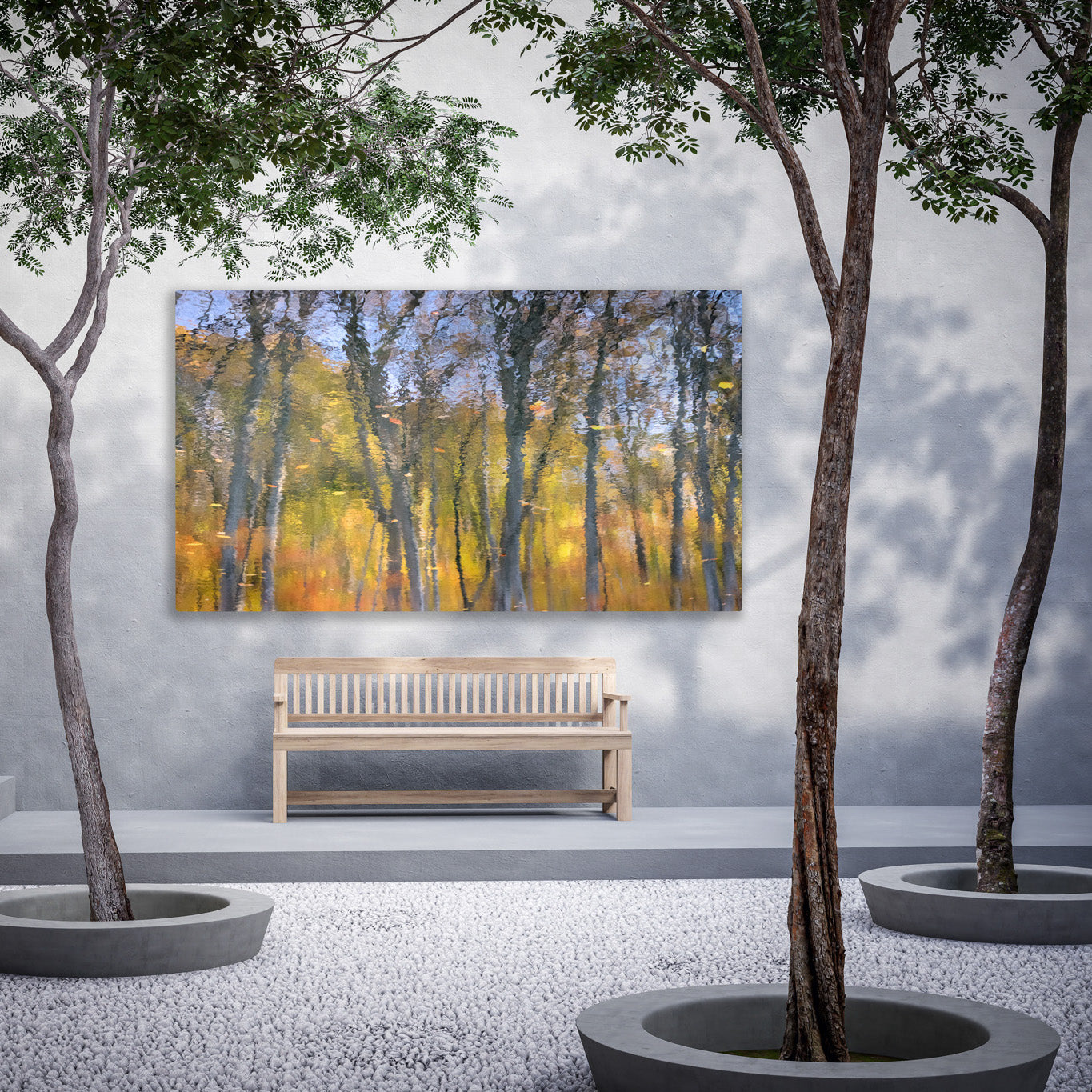
Our specialized ChromaLuxe metal prints use a pure inorganic aluminum alloy base with a high-temperature hardened, sealed polymer coating. They are inherently 100% waterproof, moisture-proof, and free of OBA optical brighteners. This means they are fundamentally almost immune to microclimate condensation, fungal foxing, and gas fading, which traditional paper fears most.
More importantly, acknowledging the superior preservation power of metal prints over traditional photographic paper does not mean you have to give up the sense of ritual and substantiality that "framing art" provides. To satisfy creators and collectors with extremely high visual demands, we have specially developed two framing techniques, considering the media characteristics, that combine contemporary aesthetics and suitability for Taiwan:
1. Double-Layer Dimensional Aluminum Frame (Showcasing a substantial visual presence like a classical oil painting frame)
This framing technique uses a precise double-layer structure to create a floating, three-dimensional, and understated substantiality for metal prints, akin to a traditional classic oil painting frame (Canvas Frame). The best part is that the entire outer frame is made of metal, which not only perfectly complements the visual tension of the image but also absolutely will not release acidic gases with temperature and humidity changes like traditional wooden frames, thus cutting off the risk of the artwork's "self-catalyzing degradation" at its source.

▲ Photography joint exhibition現場 2026: This metal print, framed with a "double-layer dimensional aluminum frame," allows the creator to no longer worry about microclimates, and can confidently and proudly bestow the artwork with the perfect second half of its life.
2. Dimensional Matting + Archival Metal Frame (Reproducing the elegant layered feel of classic photo matting)
If you are deeply captivated by the "window depth" created by traditional matting, this technique is our ultimate solution tailored for you. We utilize a unique three-dimensional spatial structure design to elegantly reproduce the classic dimensional matting layers of photographic works, completely eliminating the traditional plant fiber mat board's risks of absorbing moisture, molding, and causing acid burn at the edges. Paired with a sleek archival frame, the artwork exudes a classical, elegant museum-grade aura while possessing contemporary defenses fully adapted to island climates.

▲ Dimensional Matting + Archival Metal Frame: Perfectly reproduces classic window depth while eliminating the fatal risk of traditional mat board getting damp and molding.
When the essence of an image transforms from a sponge-like paper base to a structurally stable aluminum alloy panel and polymer coating, the heavy environmental burdens of traditional framing vanish instantly. You no longer need to seal your cherished artwork behind thick protective glass, but can truly and effortlessly appreciate the image's most raw, most stunning, ultimate details.
FAQ: Image Preservation and Material Summary
Q1: My frame is advertised as "exhibition-grade acid-free materials," so why is the photographic paper inside still wavy?
Q2: Why does the article strongly advise that photos "must never be directly adhered to glass"?
Q3: Is the cost of traditional framing really high to achieve museum-grade preservation?
Q4: Is it really safe for metal prints to be without glass protection? Will they lose their premium exhibition feel?
【References】
-
Padfield, T., et al. (2019). Conservation physics: The response to changing temperature of a back-protected canvas. Conservation Physics.
(Corresponds to: Physical study of microclimate greenhouse effect, thermal gradients, and condensation water transfer in frames) -
Wilhelm, H. (2018). An Overview of WIR Print Permanence Ratings for Color Print Materials Used in Consumer and Professional Markets. IS&T International Symposium on Technologies for Digital Photo Fulfillment.
(Corresponds to: Durability assessment of modern giclée prints and ozone gas fading hazards in unprotected display) -
Wilhelm, H., et al. (2021). A Long-Term Study of Light-Induced Yellowish Stain Formation in Photographic Papers. Online Conference: Colour Photography and Film.
(Corresponds to: Degradation mechanism of OBA optical brighteners and chemical reactions inducing yellowish stains in photographic paper) -
Thickett, D., et al. (2007). The effect of air tightness on rh buffering and control. Museum Microclimates, National Museum of Denmark.
(Corresponds to: Hazards of acetic acid / organic acid corrosive gas release from MDF and other synthetic boards in highly enclosed spaces) -
Image Permanence Institute (IPI). (2010). A Consumer Guide to Materials for Preservation Framing and the Display of Photographic Images. Rochester Institute of Technology.
(Corresponds to: ISO framing material avoidance guidelines, glass blocking damage, and hinging methods)