
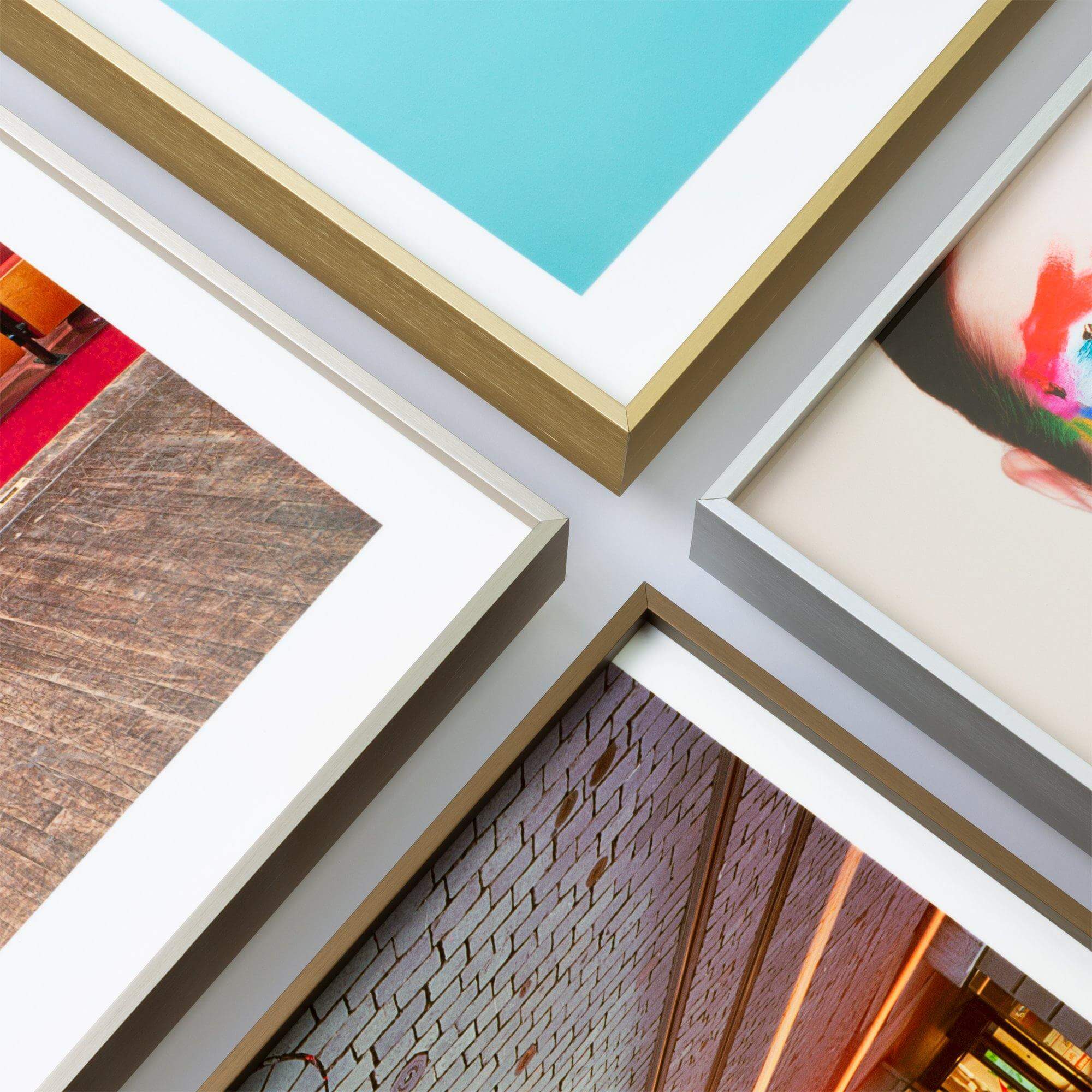
Fine Art Prints vs. Metal Prints: An Output Guide for Island Climates

Entrust your images to printing media that can withstand the test of time.
At the last mile of image output, many creators, just before sending their files, often find themselves in an internal struggle: "Should this cherished work be printed as a traditional giclée, or should I try a contemporary metal print?"
As a specialized metal print studio, we, of course, have a soft spot for metal prints (laughs). But putting aside our bias, we aim to provide objective insights to help you find the medium that best suits the essence of your image: If you seek the warm, porous texture and classic feel of paper, choose a premium giclée print; but if you desire a three-dimensional and frameless contemporary aesthetic, and want to avoid the negative impacts of Taiwan's humid climate on your artwork, then a metal print is definitely worth considering.
For decades, Giclée Print has been the gold standard recognized by museums and galleries. However, with contemporary art's strong pursuit of "spatial extension" and the rigorous challenges of paper preservation in Taiwan's humid climate, more and more professional creators are seeking more durable alternatives.
This commitment to image preservation and exhibition quality has led us to choose a clear path: we don't aim to be a general print service that prints everything; instead, we focus on doing one thing well—becoming the specialized studio for ChromaLuxe® Metal Prints, which we exclusively recommend. This article will provide an in-depth analysis of why metal prints are becoming the new contemporary standard for physicalizing images.
Material Analysis: Giclée Print vs. Metal Print
Different printing media possess distinctly different characteristics. Giclée prints emphasize the "breathability of paper," while metal prints pursue "vibrant color reproduction and effortless, convenient preservation." Below is our objective assessment based on the three dimensions most important to creators:
| Evaluation Metric | Traditional Giclée Print (Giclée Print) |
ChromaLuxe Metal Print (Metal Print) |
|---|---|---|
| Visual & Three-Dimensionality | Warm colors, relies on the texture of fine art paper like cotton, acid-free paper to create a classic feel. Images exhibit high sharpness. |
Crystal clear and translucent. Dyes are infused directly into the aluminum panel coating using high-temperature heat press, creating a slightly 3D, deep feel with rich shadow detail. Details are naturally crisp. |
| Frameless Display Experience | Requires traditional frames with acrylic/glass for protection, significantly increasing weight. Acrylic reflections can easily obscure viewing details. |
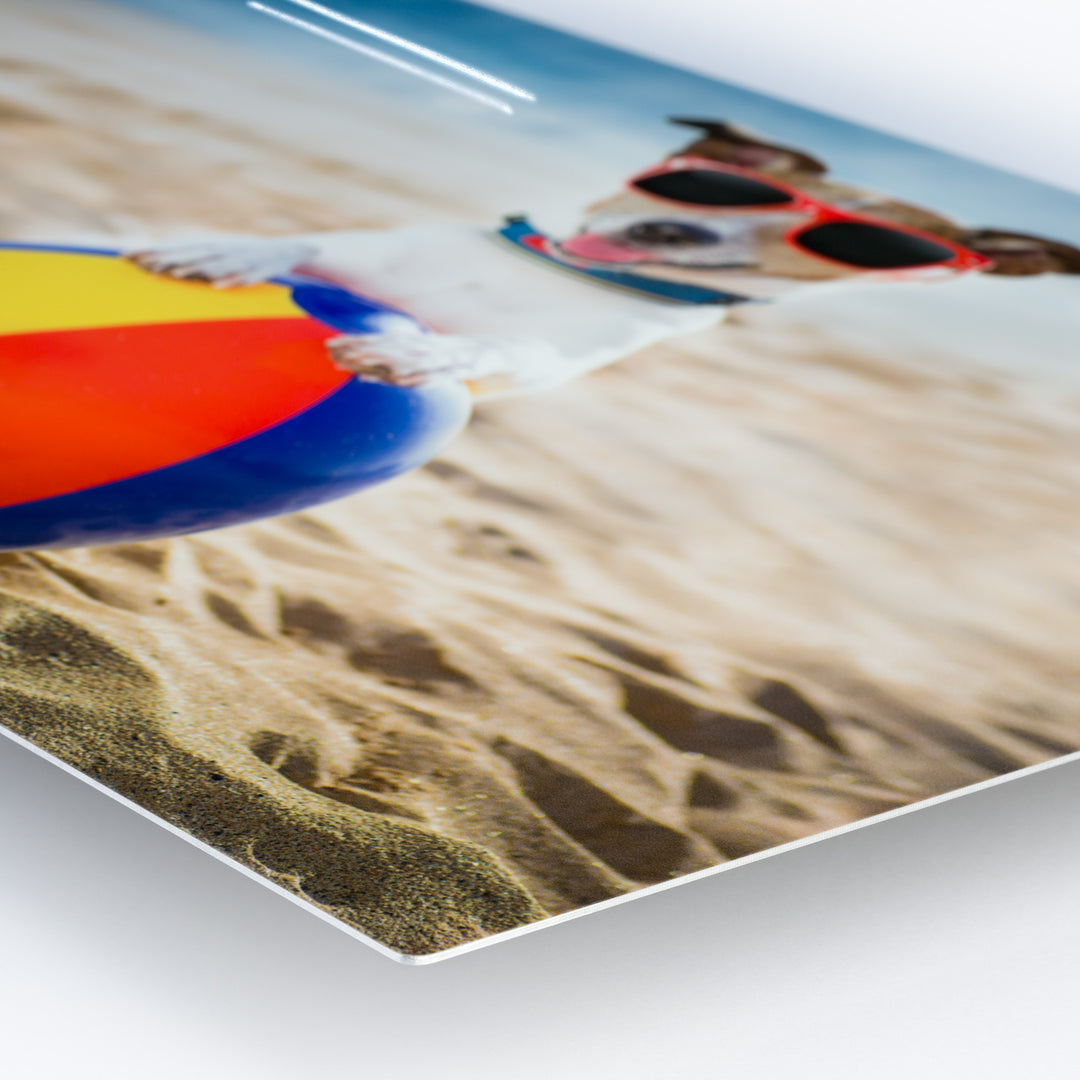
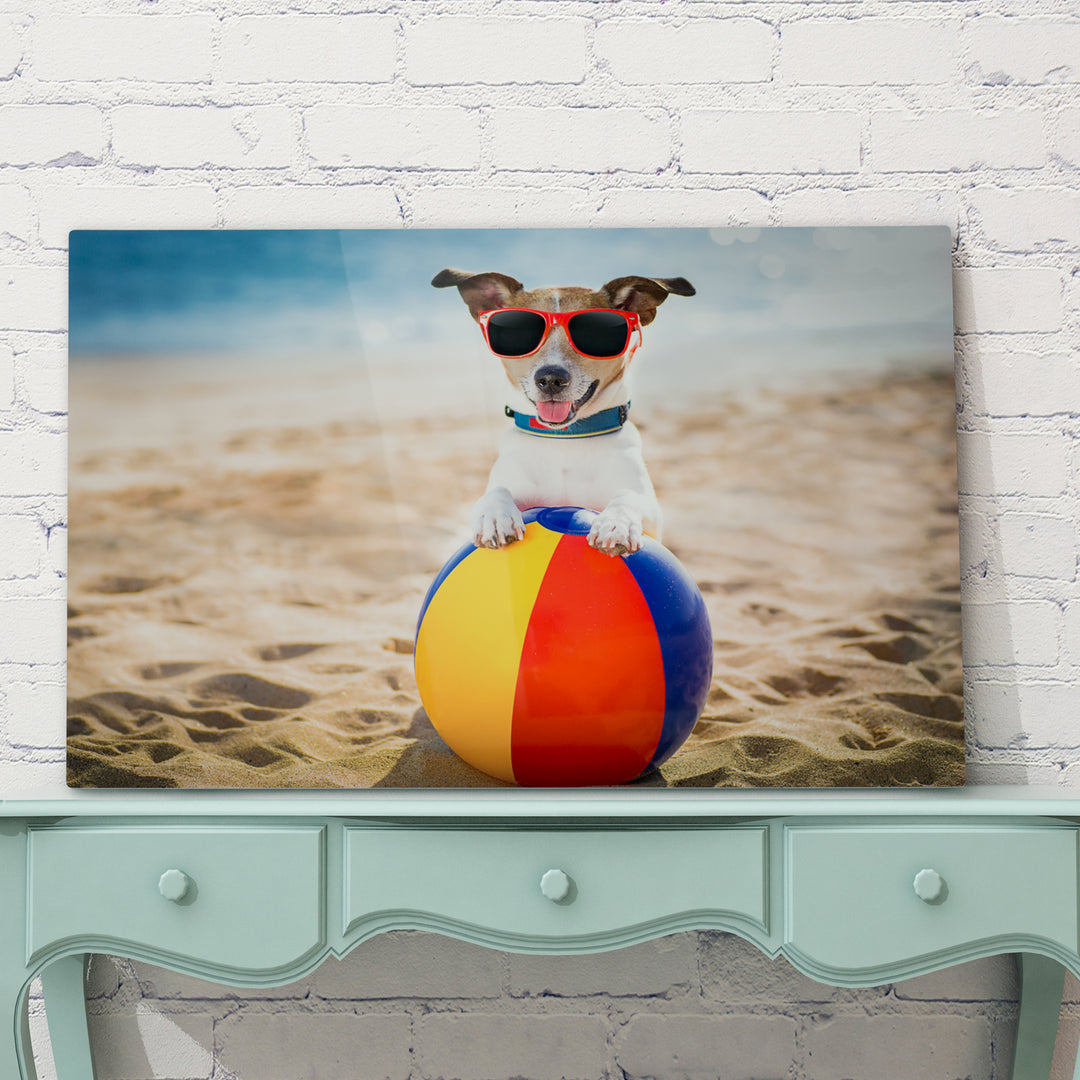
Purely frameless, with an inherent sheen. No glass protection needed; surface reflections contribute to the artwork's three-dimensional layers. Paired with a floating back frame, it's lightweight and offers an unobstructed view. |
| Moisture and Water Resistance |
Stricter environmental requirements. Recommended storage in environments with relative humidity below 50%; otherwise, paper is prone to moisture absorption, mold, or wrinkling. |
100% waterproof and moisture-proof. The non-porous material properties effortlessly handle Taiwan's hot and humid climate, and are also suitable for bathrooms. |
| Surface Protection | Surface is relatively fragile; dark ink areas especially need care to avoid scratches. Cannot be cleaned with liquids. |
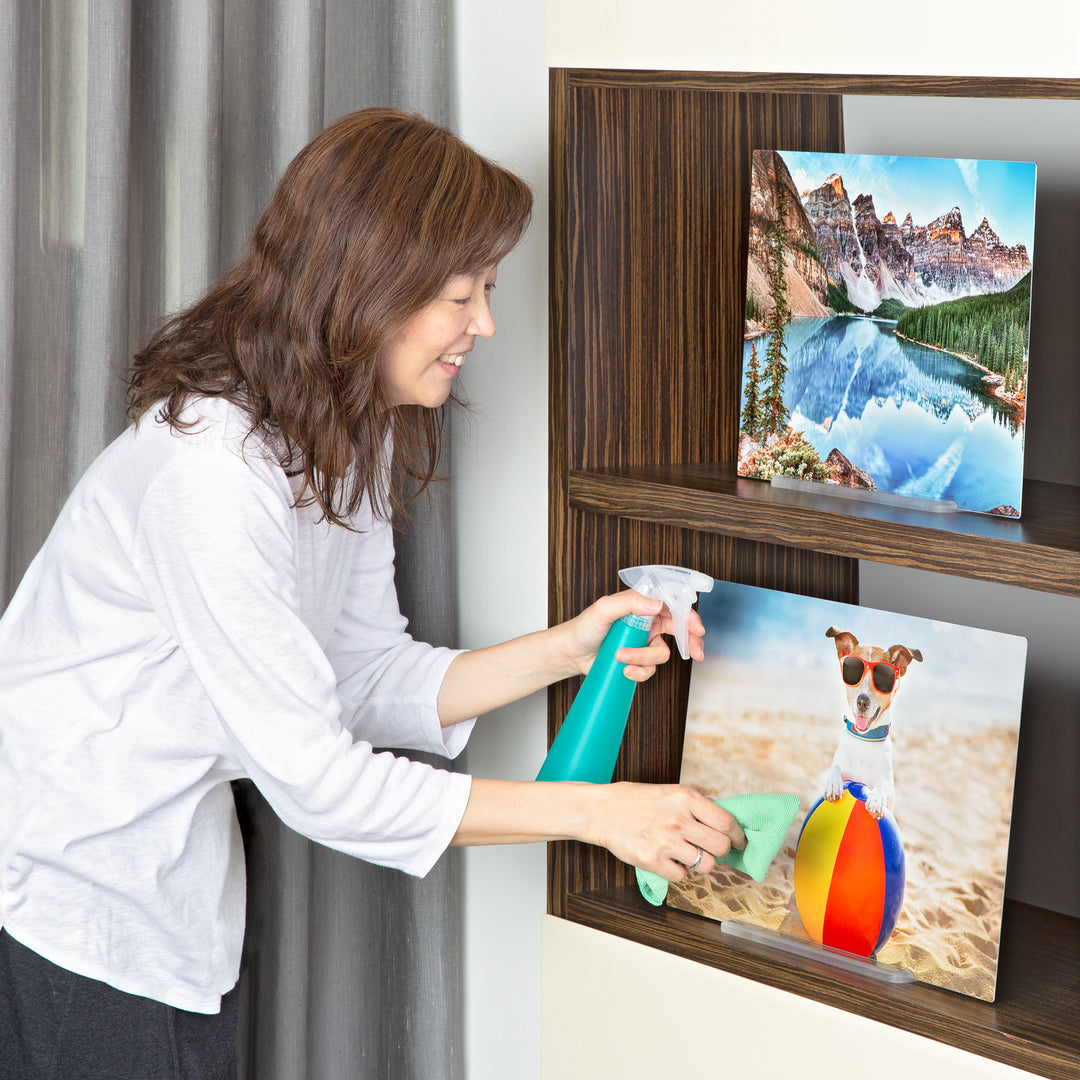
Colors are deeply sealed within a highly durable surface, making it extremely scratch-resistant. Can be wiped with water or alcohol for dusting. |
| Long-term Preservation Lifespan | Museum-grade archival (requires strict temperature and humidity control). Air pollution and humidity in the environment are major variables for aging. |
Museum-grade archival (requires good ventilation). No concerns about fluorescent agent degradation, but stagnant humidity and UV radiation are major variables for aging. |
The Chemical Truth: That alluring "bright white" is also key to yellowing
Many creators pursue the ultimate "bright white" on giclée photo paper, unaware that it is often the result of adding Optical Brightening Agents (OBAs) during the papermaking process. In Taiwan's environment, these chemical additives begin irreversible degradation as soon as they are exposed to UV light. Over time, persistent "yellowish stains" will slowly appear in the bright areas of the artwork.
Adding to the problem, the "microporous coating" designed to absorb ink on giclée photo paper acts like a sponge under a microscope. It gradually absorbs ozone and pollutant gases from the air, triggering oxidation reactions that rapidly distort the image, a phenomenon academically known as "Gas fading."
In contrast, ChromaLuxe metal prints, with their high-temperature hardened coating, feature a "completely sealed polymer coating" that is inherently immune to such chemical degradation. They don't rely on brighteners; instead, they preserve colors within the coating, leveraging the pure brilliance of the metal itself.
The Compromise of Framing: A Reflective Protective Layer, or a Hotbed for Mold?

Many photographers regret that the perfect details meticulously refined on screen are often obscured by reflections from acrylic or glass after being printed and framed, interfering with the viewing experience. However, without acrylic protection, fragile photo paper struggles to withstand environmental erosion.
Yet, in an environment like Taiwan, with frequent air conditioner usage in summer and significant day-night temperature fluctuations, adding acrylic in front of the artwork can become a fatal flaw. A sealed frame can create a "microclimate greenhouse" inside.
When the external temperature drops sharply, moisture absorbed by the paper, unable to escape, condenses on the inside of the glass/acrylic, and then re-absorbs into the artwork through capillary action. This not only causes the paper to warp and deform like waves but also creates a perfect breeding ground for mold.
In contrast, metal prints, due to their extreme scratch resistance and 100% waterproof properties, do not require any front protective layer. They only need to be paired with our exclusive hidden "frameless floating back frame." This direct hanging method not only achieves a pure frameless look, allowing the image to extend infinitely without obstruction, but also fundamentally eliminates the tragedy of the greenhouse effect.

If you love the tactile feel of paper and decide to choose giclée, it's crucial to understand how to combat humidity.
Recommended Reading: How long do giclée prints last? A long-term preservation guide
Behind the Authoritative Tests: The "Inconsistent Starting Line"
Many traditional photo papers on the market claim a "hundred-year lifespan," but if you carefully review the footnotes in reports from the international authority Wilhelm Imaging Research (WIR), you'll find that these claims often apply under extremely weak lighting conditions and "must be framed under UV-protective glass" to achieve laboratory results.
According to WIR's rigorous testing, ChromaLuxe metal prints, under harsh conditions of "no glass protection whatsoever, exposed directly to air (Bare hanging)," and enduring almost 4 times stronger light (450 lux), still achieved a fade resistance rating of over 65 years. This durability far surpasses what traditional silver-halide photo papers can achieve even when protected behind glass.
The "Crucial 10%" That Are Better Suited for Giclée Prints
We deeply love metal prints, but we respect the essence of images even more. If the soul of your work belongs to that "crucial 10%"—for example, if you need to display an extremely rich, finely graded pure black and white grayscale, akin to the traditional silver halide era; or if your image is filled with very special extreme colors like fluorescent orange or fluorescent green.
In such cases, we would directly advise you: "This artwork would look much better with a traditional giclée print!" Because we understand the limitations of metal print materials. As guardians of images, we sincerely hope that your work is presented perfectly with the most suitable material.
Breaking Geographical Barriers: Finding Another Option for High-Quality Prints
Many photographers and curators preparing exhibitions in Taipei typically search for local giclée print studios to easily conduct color proofing and pick up their orders. We fully understand that the distance between counties can cause some anxiety for creators regarding color management.
We are based in Taichung and do not offer giclée printing. However, if you desire the visual impact of metal prints, we provide an online ordering and estimation system that allows you to preview styles and calculate prices anytime, anywhere. Coupled with reliable nationwide delivery services, we effortlessly overcome geographical limitations.


However, we also want to remind you: if you are accustomed to personally overseeing the printing process at a shop, or if you urgently need your exhibition pieces within a few days, our purely online communication and "no urgent orders" production model might not be suitable for you.
But if you are willing to give us some time for printing, regardless of whether your exhibition is in Huashan, Songshan, or the Museum of Contemporary Art in Taipei, distance and material should never be an obstacle to pursuing excellence.
Sister Weis's Honest Thoughts
There is no absolutely perfect material in this world, only the home that best suits the language of your images. We chose to specialize as a metal print studio because we deeply believe in the value of this medium: truly captivating artworks should not compromise with humidity, nor should they be obscured by glass.
If you cherish the irreplaceable warm touch of paper, please seek out the most professional giclée studio; but if you crave that brilliant three-dimensionality, the sleek contemporary aesthetic that can effortlessly handle Taiwan's hot and humid climate, and its moisture-proof properties, then feel free to entrust your files to us.
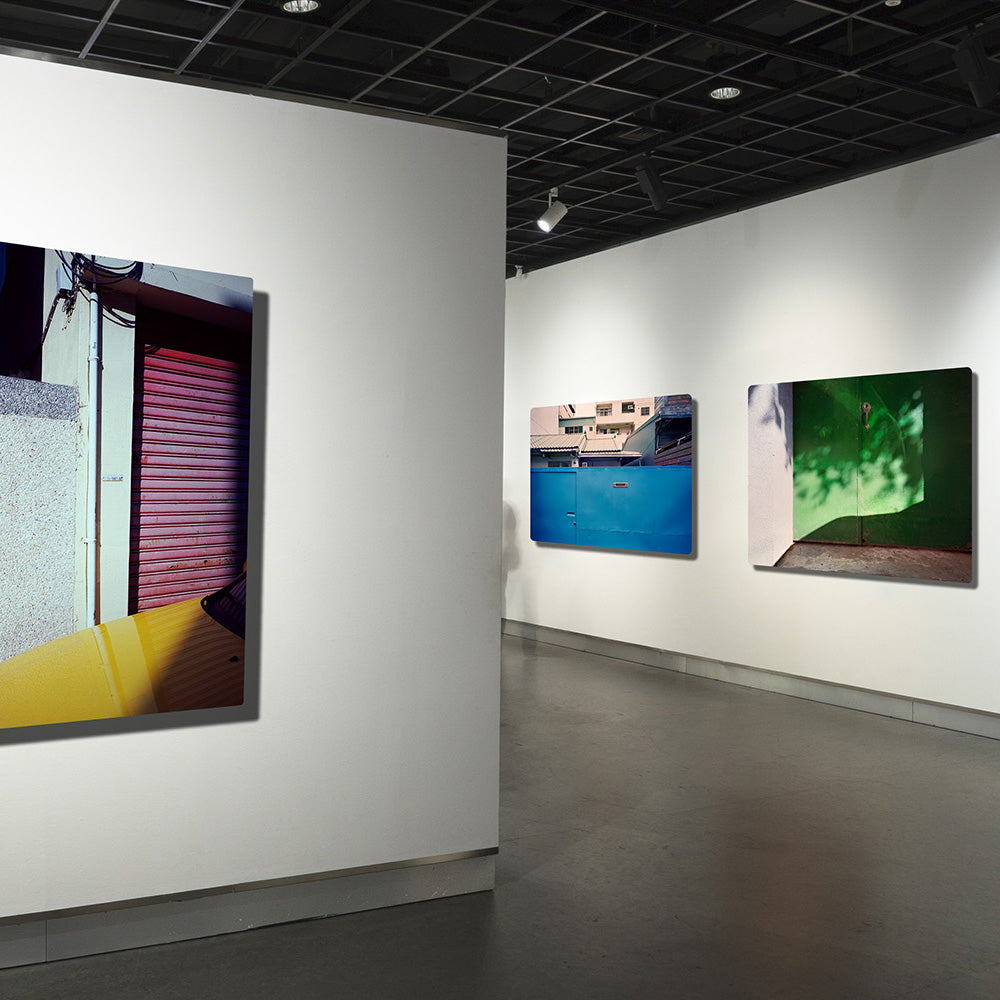
No matter how brilliant the theories and data, they cannot compare to the stunning impact in a real space. We have selected three exhibition setup case studies from different fields, inviting you to witness firsthand the visual power of metal prints in various settings:
- • Artist Solo Exhibition: Contemporary Photography Master Wu Cheng-Chang's New Works Exhibition (Metal Print Exhibition Live Report)
- • Corporate Commercial Space: A Stunning Visual of an Osprey Dive! Commercial Space 6-Panel Giant Metal Print Installation
- • Museum Educational Exhibition: "Painting the Land, Seeing the Colors" Museum Educational Exhibition: Metal Prints in Public Spaces
Frequently Asked Questions (FAQ) about Giclée Prints and Metal Prints
Q1. Will the colors of metal prints look exactly the same as what I see on screen?
This is a very professional question. We use the X-Rite PANTONE professional color management system to faithfully reproduce your images to the best of our ability. However, we must honestly state that there are fundamental differences between backlit screens (RGB emissive) and physical prints (CMYK plus high-temperature dye-sublimation reaction), so the results cannot be exactly identical.
Metal prints cannot reproduce the "tactile feel" of paper, and the heat transfer process inevitably introduces slight color variations. The metallic material will give images stronger contrast and depth. If you have extremely precise color requirements, we strongly recommend requesting a physical proof before printing large-format works, so you can fully understand the visual impact of the final product before your exhibition.
Q2. I initially planned to print giclée, but now I want to switch to metal prints. Do I need to re-process the file resolution?
Generally, no. As long as you provide high-resolution JPG or TIFF files (300dpi or higher recommended) and embed an Adobe RGB or sRGB color profile, we can proceed directly with professional processing.
Regardless of whether you ultimately choose traditional giclée prints or metal prints, correct digital file resolution is the core foundation for determining image sharpness.
Recommended Reading: Complete Photo Size and Pixel Resolution Comparison Chart
Q3. Do you offer proofing services? Can I fine-tune the layout when printing large sizes?
Yes, we strongly encourage creators to confirm the color and visual impact of metal prints firsthand through physical proofs! We offer comprehensive paid proofing and discount services:
- You are free to choose an 8"x10" or larger metal print as a proof.
- After receiving the physical proof, if you decide to print a larger version of the same image file within two weeks, please notify us via email.
- We will send you a time-limited exclusive discount code, offering a 20% discount on the small-sized proof item (excluding accessories and shipping), for you to use when placing your final large-sized order.
When printing large sizes, slight adjustments to text placement, proportions, or bleed may be necessary. Rest assured, as long as the modifications align with the core spirit of "proof confirmation," we will flexibly apply the discount! If you believe you qualify but we accidentally missed providing a discount code, please feel free to contact us for further assistance.
References for material science and preservation limit analysis in this article:
-
A Long-Term Study of Light-Induced Yellowish Stain Formation, Wilhelm Imaging Research (WIR).
(Corresponds to: OBA optical brightening agent degradation and yellowish stain analysis) -
Comparison of Different Methods for Estimating the Sensitivity of Inkjet Images to Gas Fading, Wilhelm Imaging Research (WIR).
(Corresponds to: Microporous coating ozone absorption and gas fading physical mechanism) -
How to protect glazed pictures from climatic insult, Conservation Physics (Tim Padfield et al.).
(Corresponds to: Microclimate greenhouse effect within frames and moisture condensation transfer study) -
ChromaLuxe Achieves Three Times the Print Display Permanence Rating Compared to Silver-Halide Color Papers, Wilhelm Imaging Research (WIR).
(Corresponds to: Metal print bare hanging test conditions and lifespan rating) -
WIR Print Permanence Ratings for ChromaLuxe prints (2017-06-08), Wilhelm Imaging Research (WIR).
(Corresponds to: Baseline difference and lifespan rating comparison for test illuminance 120 lux and 450 lux) -
Paper Conservation Catalog: 4. Support Problems, American Institute for Conservation (AIC).
(Corresponds to: Paper moisture absorption characteristics, wavy deformation, and mold growth physical limitations)