

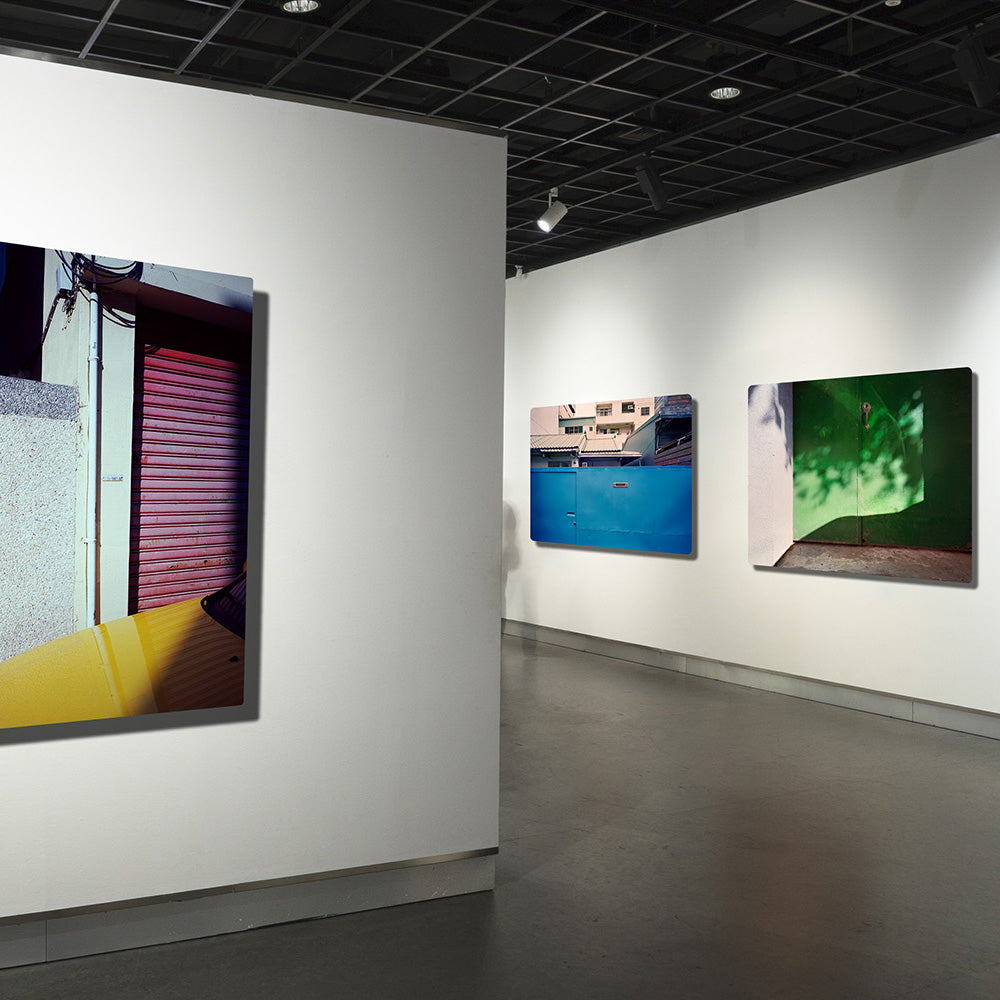



ISO 18936: Thermal stability and permanence of metallic images

ISO 18936: Thermal Stability and Preservation Science of Metal Prints
Documentation Alignment and Translation: CCP Metal Print Studio Technical and Archival Research Team
Compliance and Licensing Statement: Licensed to CCP Metal Print Studio Ltd. (Translated from the official full authorized text of ISO 18936:2020)
First Published: August 2026
I. International Standard Background and Scope
The International Organization for Standardization (ISO) published "ISO 18936:2020(E) Imaging materials — Processed colour photographs — Methods for measuring thermal stability" in 2020. This standard was developed by ISO/TC 42, Photography, and aims to standardize the process for measuring thermal stability and estimating chemical life of color imaging materials in "dark storage" conditions without light.
The scope of this standard covers the following color imaging media:
- Traditional Color Photographic Materials: Chromogenic, Cibachrome/Ilfochrome, dye transfer, and dye diffusion transfer.
- Digital Color Imaging Systems: Dry and liquid toner electrophotography, digital inkjet printing, and thermal dye transfer/dye sublimation systems.
The standard establishes that color balance shifts and yellowish stains in unexposed areas (Dmin) of image colorants during long-term preservation are primarily determined by the inherent chemical stability of the material, as well as ambient temperature, relative humidity, and atmospheric pollutant concentration.
II. Measurement Environment, Conditioning, and Reference Physical Conditions (Section 6 & Section 7.2)
According to Sections 6 and 7.2 of the standard, aging measurements must be conducted in a high-precision controlled environment:
- Basic Control Conditions (Section 6): Temperature must be constant at 23°C ± 2°C, relative humidity controlled at 50% ± 10% RH, and storage must be in a completely light-free dark environment.
- Atmospheric Pollutant Exclusion (Section 6): For ozone-sensitive samples, the average atmospheric ozone concentration in the measurement environment must be below 2 nl/l (i.e., 2 ppb).
- Measurement Conditions for Inorganic Metal Substrates (Section 6, Note 4): The standard recommends using a white backing board compliant with ISO 13655 to prevent errors caused by light penetration. However, the standard specifically notes: "For completely opaque materials (such as aluminum alloy substrates), the backing board material has no effect on the measurement results." This clause confirms that for opaque metal substrates in reflection measurements, data variations caused by light penetration through the backing board can be excluded.
- Prohibition of Static Desiccators (Section 7.2.4): The standard stipulates that the use of desiccators containing aqueous solutions is strictly prohibited during testing due to the potential for chemical contamination of samples. An environmental chamber with active circulating convection must be used.
- 7-Day Moisture Conditioning Period (Section 7.2.5): Before samples are tested in sealed packaging, they must undergo a 7-day "moisture conditioning" period at 23°C and 50% RH to ensure that the internal moisture of multi-layered composite materials reaches thermodynamic equilibrium.
III. Sealed Bag Method vs. Free Hanging Method: Simulating Two Preservation Conditions (Section 7.1.1 & Section 7.2.5)
The standard describes two accelerated aging testing techniques, corresponding to different microclimatic display environments in practice:
Sealed Bag Method (Section 7.1.1)
- Physical Mechanism: After samples are pre-conditioned for temperature and humidity, they are sealed in moisture- and light-proof double-layered aluminum foil laminate bags for incubation.
- Preservation Environment Simulation: Used to simulate "closed containers with minimal air circulation, sealed boxes, or airtight framing." In this enclosed system, volatile organic compounds (offgassing) released by imaging materials or packaging due to heat are trapped within the space, interacting with the image layer and accelerating chemical degradation.
- Physical Isolation Specification (Section 7.2.5): The clause states that if samples experience surface sticking during sealed high-temperature aging, a 50 µm to 75 µm thick polytetrafluoroethylene (PTFE / Teflon) film may be used for physical isolation (interleaving) to prevent damage to the surface structure.
Free Hanging Method (Section 7.1.1)
- Physical Mechanism: Samples are suspended in the test chamber with spacing maintained to ensure uniform air circulation contact with the surface.
- Preservation Environment Simulation: Simulates "open displays with natural air circulation." This method reflects the physicochemical degradation characteristics of artworks when hung indoors with normal ventilation.
IV. Thermophysical Limits and Mechanical Deformation Indicators (Section 7.1.2, 7.1.3 & Section 8.2)
The standard explores the physical limits of polymeric imaging materials under thermal stress at a molecular level:
- Phase Transition Characteristics of Glass Transition Temperature (Tg) (Section 7.1.2): Color photographs often use polymeric binders (such as gelatin or polyester) to carry colorants. When temperature and humidity reach a specific critical point, the polymeric structure will soften from a "glassy state" to a "rubbery state." This critical point is the glass transition temperature (Tg).
- Colorant Migration Mechanism: After the polymer chain crosses Tg, the network structure expands, reducing the binding force on colorant molecules, leading to dye migration and diffusion (bleeding). Macroscopically, this manifests as color shift, ghosting, or surface ferrotyping.
- Non-linear Aging Reaction (Section 7.1.3): If the test temperature exceeds Tg, phase change degradation inconsistent with normal dark storage at room temperature will be induced. In this case, Arrhenius aging predictions will exhibit "non-linearity" and become invalid, requiring the exclusion of that data set.
- Obligation to Document Physical Deformation (Section 8.2): Section 8.2 of the standard requires that in addition to recording optical density, aging tests must mandatorily record visual appearance and physical deformation. Clearly listed failure modes include: curl, cockle, cracking of the coating, and physical delamination.
V. Practical Implications of ISO 18936 for Dye-Sublimation Metal Prints in Material Science
Based on the above physical and chemical clauses, objective protection guidelines for the preservation and storage of dye-sublimation metal prints (Dye Sublimation on Aluminum) can be summarized as follows:
- Gas Barrier and Open Display (Section 6): The hardened polyester coating of dye-sublimation metal prints has non-porous, closed characteristics. This physical property gives them higher resistance to gas fading and ozone contamination in open displays without glass protection.
- Exclusion of Chemical Offgassing (Section 7.1.1 / 7.2.4): The standard's warning regarding enclosed containers confirms that polyester coatings are prone to adsorbing acidic gases released by packaging materials (such as corrugated cardboard boxes) in non-circulating environments, leading to yellowing. In practice, unpacking to maintain natural air circulation is a necessary condition to slow down the chemical degradation of the coating.
- Smoothness Requirement for Surface Interleaving (Section 7.2.5): The standard permits the use of PTFE as an interleaving material for high-temperature anti-sticking. This specification indicates that high-gloss polyester coatings are prone to sticking and surface burnishing under pressure. When storing multiple prints stacked flat, acid-free polyester film (such as Mylar) or PTFE with equivalent smoothness should be used for physical isolation, avoiding ordinary acid-free paper with fibrous texture.
- Protection Boundary for Thermophysical Pathology (Section 7.1.2 / 8.2): The Tg of dye-sublimation polyester coatings is approximately 50°C. Long-term exposure to enclosed high-temperature environments exceeding Tg will induce dye migration and may cause coating cracking and physical delamination as mentioned in Section 8.2. Storage environment temperatures should be strictly controlled below this critical point.
- Thermodynamic Lag of Temperature Transfer (Section 7.2.5): The 7-day conditioning period specified by the standard reflects the thermodynamic lag effect of multi-layered composite materials during temperature and humidity changes. Because aluminum alloy substrates conduct heat quickly, when crossing temperature zones (e.g., air transport or removal from cold storage), a slow acclimatization period of at least 24 hours is required to prevent the surface from falling below the dew point and forming condensed moisture, which can damage material stability.
【References】
- [1] ISO 18936:2020(E), Imaging materials — Processed colour photographs — Methods for measuring thermal stability, International Organization for Standardization, Geneva, Switzerland.
- [2] ISO 18924, Imaging materials — Test method for Arrhenius-type predictions, ISO.
- [3] Burge, D., & Nishimura, D. (2010), A Consumer Guide to Materials for Preservation Framing and the Display of Photographic Images, Image Permanence Institute (IPI), RIT.
Translation Compliance and Collaboration Statement: The Traditional Chinese translation of this technical topic was initially rendered using advanced AI language models, and then rigorously reviewed and proofread by our team for specialized terminology in image preservation and material science, as well as for practical application in home environments.
In adherence to the highest respect for intellectual property rights and academic compliance, this website does not provide, publicly sell, distribute, or reproduce any PDF text or clause content of the original official ISO standard documents. If archival institutions, conservators, or academic peers require access to the most stringent original English testing data, equipment specifications, and calculation formulas, please proceed to the official website of the International Organization for Standardization (www.iso.org) to purchase the compliant authorized original official documents.