

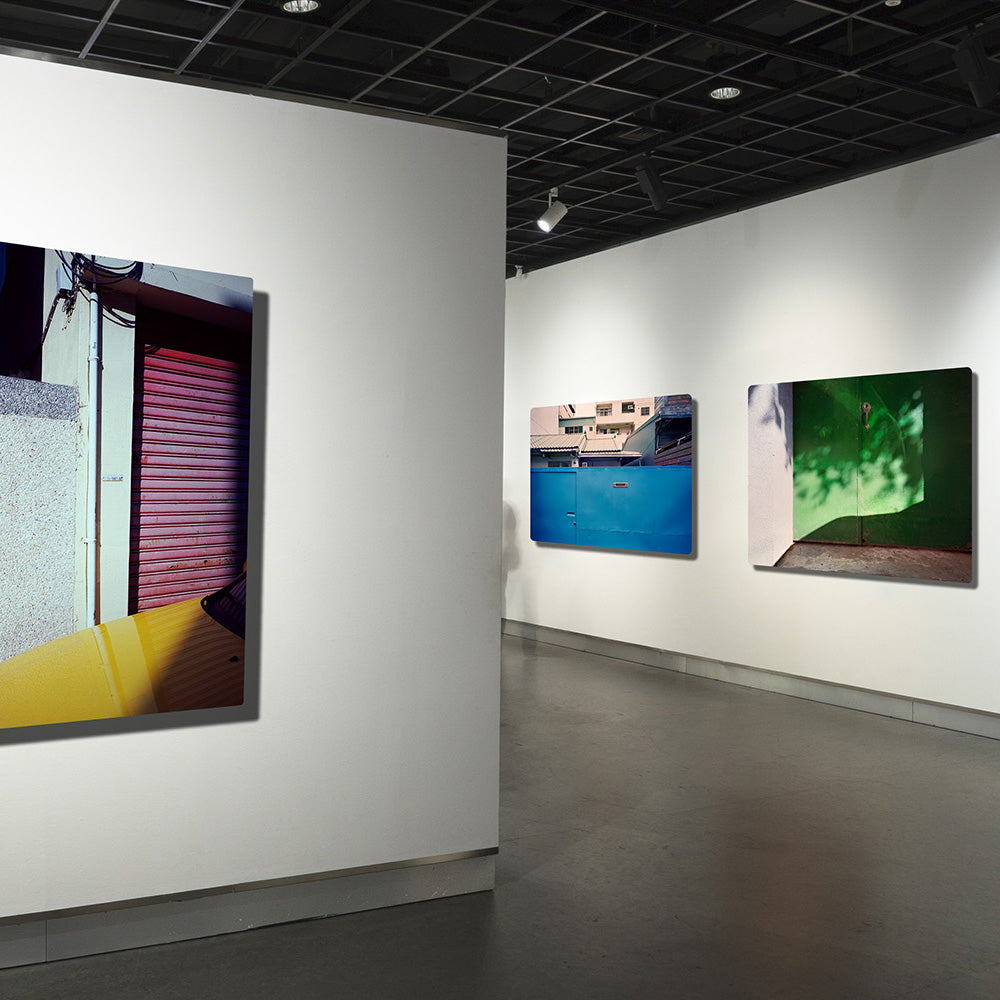



ISO 18902: Imaging materials — Processed photographic reflection prints — Storage practices

ISO 18902: Framing, Display, and Material Safety Science
Documentation Alignment and Translation: CCP Metal Print Studio Technical and Archival Research Team
Compliance Authorization Statement: Licensed to CCP Metal Print Studio Ltd. (Translated based on the officially authorized full text of ISO 18902:2013)
First Published: August 2026
I. International Standard Background and Scope
The International Organization for Standardization's publication, "ISO 18902:2013(E) Imaging materials — Processed imaging materials — Albums, framing and storage materials," serves as the core chemical and physical guideline for museums and archival institutions worldwide when selecting consumables for artwork protection. This standard aims to regulate all materials used for touching, protecting, packaging, and displaying photographic and imaging works (including mat boards, storage boxes, protective glazing, adhesives, metal frames, and plastic sleeves), ensuring that external materials do not release harmful chemical gases or accelerate the chemical degradation of artworks.
The scope of this standard covers the preservation and display of the following imaging media:
- Traditional color and black-and-white photographic materials: Silver halide prints (Chromogenic), silver dye bleach prints (Cibachrome/Ilfochrome), and negatives.
- Digital imaging output systems: Dye-based and pigment-based inkjet printing, dye sublimation metal prints, and dry and liquid toner electrophotography.
The standard establishes that chemical interactions between framing consumables and the artwork (such as organic acid release, plasticizer migration, and sulfidation reactions) are critical factors determining the long-term preservation stability of imaging carriers.
II. Strict Academic Definition of "Photo-safe" (Section 3)
Regarding the common "acid-free" label on the market, according to Section 3 of ISO 18902, to achieve a truly "Photo-safe" standard, the following physical and chemical defense indicators must be met:
- Acid-free and pH Determination (Section 3.1 & 3.2): The definition of acid-free adhesives and paper/paperboard is that when measured by the cold extraction method (TAPPI T509), their pH value must be greater than or equal to the reference water minus 0.5, and must be less than 10.0. A strongly alkaline environment above 10.0 will also cause chemical degradation of the image coating.
- Alkaline Buffer Reserve (Section 3.4): Qualified buffered board must uniformly contain at least 2.0% (by weight) of active calcium carbonate (CaCO3) reserve. This reserve actively neutralizes accumulated acidic pollutants in the environment, preventing the artwork from yellowing due to acidic hydrolysis.
- Lignin-free (Section 3.5): The Kappa Number of paper consumables must be less than or equal to 7.0 (equivalent to a lignin mass concentration below 1.0%). Highly active lignin, catalyzed by light and humidity, easily releases organic acids, causing acidic burns at the edges of images.
- Limitations of Safety Claims (Section 3.6, Note 1): The standard explicitly states: "Materials that only meet the pH value (acid-free) or only pass a single photographic activity test (PAT, ISO 18916) shall not be directly claimed as Photo-safe." The material must fully comply with all clauses listed in this standard, including chemical stability and the absence of harmful additives, to meet this rating.
III. Material Science Limitations of Framing Structure Layers (Section 4)
The standard details the chemical and physical limitations of various consumables when in direct or indirect contact with the image polymer layer and photographic paper substrate:
1. Paper and Mat Board Consumables (Section 4.1)
- Post-consumer recycled paper ban: Framing paper materials are only allowed to use pre-consumer recycled content without printing. Post-consumer recycled material is absolutely prohibited to prevent residual unknown chemical contaminants or heavy metals.
- Bleeding resistance test: Dyes or pigments used in consumables must show no color diffusion, bleeding, or transfer after being immersed in distilled water for 24 hours and coming into contact with white bond paper.
2. Plastic Protective Layers and Sleeves (Section 4.2)
- Chemical hazards of PVC: The standard explicitly prohibits the use of chlorinated, nitric acid-based, or acetic acid-based plastics, especially PVC (polyvinyl chloride). Plasticizers within PVC are highly prone to migration with changes in temperature and humidity, softening and dissolving the image surface protective layer, leading to severe sticking and coating delamination.
- Approved safe plastics: Recommended materials include polyester film (such as PET / Mylar), polyethylene (PE), polypropylene (PP), and non-woven polyolefins (such as Tyvek).
3. Metal and Support Frames (Section 4.3)
- Inert metal specifications: Framing support metal components must be made of non-corrosive and chemically inert materials, such as anodized aluminum or stainless steel.
- Active coating restrictions: If the metal surface has paint, coatings that release volatile substances, peroxides, or harmful off-gassing are strictly prohibited and must pass the ISO 18916 Photographic Activity Test (PAT).
4. Adhesives and the Principle of "Reversibility" (Section 4.4)
- Water-based adhesive ban: Water-based adhesives are prohibited from being applied directly to inkjet photographic paper without a resin coating, to prevent inducing dye dissolution and spreading of ghost images (bleeding).
- Yellowing risk of pressure-sensitive adhesives: Some pressure-sensitive adhesives (PSA) that pass the PAT test still carry the risk of causing deep yellowing of the image over long-term adhesion. The standard advocates the principle of "reversibility," recommending the preferential use of acid-free polyester photo corners (Mylar Photo Corners) or Japanese tissue hinges for physical securing.
IV. Viewing Surface Protection: UV Cut-off Rate and Enclosure Discipline (Section 4.6 & 4.7)
1. UV Protection and Prohibition of Direct Contact (Section 4.6)
- UV Optical Density (OD): The optical density of protective glazing (glass or acrylic) in the 300 nm to 380 nm range must reach at least 1.5 (equivalent to a UV cut-off rate of 96.8% or higher, with a transmittance of approximately 10-1.5 ≈ 3.16%), to prevent photo-oxidation from damaging dye molecules.
- Strict prohibition of direct contact: Direct contact between the artwork and the front glazing is absolutely prohibited. A physical buffer space must be provided through acid-free mat boards or spacers; otherwise, condensation inside the glazing due to temperature differences will moisten the image coating, leading to physical damage such as blocking and ferrotyping.
2. Airtight Sealing Specifications for Wooden Frames (Section 4.7)
- Traditional solid wood or particleboard frames continuously release harmful gases such as acetic acid and formaldehyde into the microenvironment. The standard stipulates that if materials other than metal and inert plastics (such as wooden frames) are used for framing, all four edges of the entire framing system (including front protection, mat board, artwork, and backing board) must be completely sealed with "aluminized polyester tape" or other airtight materials to prevent acidic volatile substances from penetrating the image layer.
V. Practical Application Insights of ISO 18902 for Dye Sublimation Metal Prints
Combining ISO 18902 with the high relative humidity climate characteristics of Taiwan provides the following material science insights for high-end archival applications:
- Chemical inertness of anodized aluminum backframes (corresponding to Section 4.3): The standard designates inert anodized aluminum as the highest safety level for support metal. ChromaLuxe metal prints use a purely inorganic corrosion-resistant aluminum alloy substrate, paired with anodized aluminum suspension backframes or dimensional aluminum frames, offering extremely high physical and chemical inertness, completely eliminating the degradation risk of acetic acid or formaldehyde release from traditional wooden frames.
- Frameless open display to exclude microclimate degradation (corresponding to Section 4.6): The standard strictly limits contact between protective glazing and the artwork. In Taiwan's island climate, adding glass can easily trigger condensation due to indoor temperature differences, leading to adhesion problems. Dye sublimation metal images, with pigments locked in a polymer polyester coating at high temperatures, possess excellent waterproof and anti-physical abrasion properties, making them suitable for glass-free open display, avoiding the pitfalls of condensation and glass adhesion.
- Acid-free PP corrugated board to block moisture (corresponding to Section 4.1 & 4.2): For wall dampness, if acidic backing boards containing lignin are used, they are prone to moisture absorption and mold growth. Using archival-grade acid-free hollow polypropylene board (PP Coroplast) as the backing board for metal frames provides excellent chemical stability and moisture resistance, effectively blocking the transfer of wall moisture.
- Structure free from fiber mold (corresponding to Section 4.1): Traditional plant fiber mat boards in Taiwan are susceptible to dampness and can cause acidic burns. A metal dimensional structure that separates the backing plate from the outer frame, using acid-free and moisture-resistant materials to reconstruct the dimensional depth, not only eliminates the risk of fiber moisture absorption and mold but also ensures the chemical stability of the image in a normal temperature, ventilated environment.
【References】
- [1] ISO 18902:2013(E), Imaging materials — Processed imaging materials — Albums, framing and storage materials, International Organization for Standardization, Geneva, Switzerland. (Certificate Registration: Licensed to CCP Metal Print Studio Ltd.)
- [2] Image Permanence Institute (IPI), (2018), Preservation of Digitally-Printed Images, Rochester Institute of Technology (RIT).
- [3] American Institute for Conservation (AIC), Paper Conservation Catalog: Support Problems, Washington D.C., USA.
Translation Compliance and Collaboration Statement: The Traditional Chinese translation of this technical topic was initially translated using advanced AI language models, and then rigorously reviewed and practically proofread by our team for specialized terms in image preservation and material science.
Based on our utmost respect for intellectual property rights and academic compliance with international standards, this site does not provide, publicly sell, copy, or distribute any original PDF articles or electronic texts of the ISO official standard documents. If archival institutions, conservators, or academic peers need to research or cite the complete original official methods for testing instrument operation and chemical analysis steps, please purchase the compliant authorized original official PDF document directly from the International Organization for Standardization's official website (www.iso.org).